
Product Description
Product Description
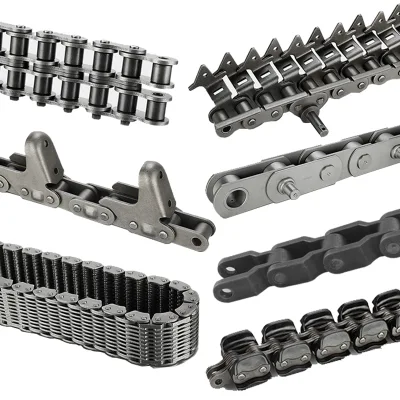
Cast fixed pin chain, pintle chain, drop forged link chain and Engineer Class Driving Chain, with alloy steel and stainless steel selection according to your requirement
1, Chain types: drop forged rivetless chain, Roller Chain, conveyor chain, agricultural chain, sugar industry chain, palm oil industry chain, asphalt industry chain,elevator conveyor industry chain, double flex chain, pintle chain, weld steel drag chains, malleable chain etc;
2, Main materials: It is 40Mn. 40Cr, 45Mn alloy steel or SUS304 for plates, 10#, 20#, 20CrMnMo, 30CrMnTi for pins and rollers;
3, Heat treatment: Carburizing, Austemper Stressing, nitro-caburizing harden etc;
4, Surface: Shot peening, black, blue or original;
5, Package way: Plastic bag+ carton box+ plywood case
Detailed Photos
Product Parameters
Packaging & Shipping
1. Inner packing: Poly bag, air bubble bag, carton according to buyer’s request.
2. Outer packing: OSB case or pallet.
3. Please remember to leave the correct contact ADDRESS information for delivery.
Our Advantages
Company Profile
We are a leading manufacturer of mechanical transmission spare parts, as well as several years 1 of reliable and trustworthy vendors. Our main items are roller chain, conveyor chain, agricultural chain, sugar industry chain, palm oil industry chain, asphalt industry chain,elevator conveyor industry chain etc.
At present, For South American, European, and Asian market, our superior products are fabricated according to your requirement and our quality meets ISO, ASME, DIN standard.
Please watch our process steps as below
(1) punch its outer plate and inner plates
(2)Shot peening workshop
(3) heat treatment workshop
(4) assembly preparation
(5) pins process
(6) Tensile Properties Test before shipment
After Sales Service
Our products can be repaired or replaced the new parts with free cost in six months.
FAQ
Question:
1.Q:How about mould cost?
A: primarily depend on : 1.Drawing, 2.material, 3.weight and quantity.
We need to know the structure of each parts to analyze the mold solution by:
1) –Complete design drawing, product model or actual sample —– the best way
–PDF drawing with complete dimension for each parts
–Clearly photos for each parts with more angle-views to show every features.
2)The materials, technical parameters and surface treatments.
technical parameters: tell us about its model, pitch, roller diameter, width between inner plates, attachment type, outside drawing etc.
3)The quantity of order.
2.Q:How to control the product processing?
A: The processing report or pictures will be sent to the customer every week/ each month for review.
3.Q:Who will own the mould?
A:Customer, also the mould can be kept in our factory for future order.
4.Q:How long do you make your quotation?
A:After receiving detail informations we will quote in 1 to 3 days.
5.Q: MOQ? —
small chain type: if its pitch is less than 38.10mm and its thickness is less than 5mm, MOQ is 1500 CHINAMFG on these roller chains or conveyor chains;
middle chain type: if its pitch belongs (38.10mm
big chain type: if its pitch is more than 76.20mm and its thickness is more than 10mm, MOQ is 200 CHINAMFG on these roller chains or conveyor chains;
I hope we can do business together, and look CHINAMFG to hearing from you soon
/* January 22, 2571 19:08:37 */!function(){function s(e,r){var a,o={};try{e&&e.split(“,”).forEach(function(e,t){e&&(a=e.match(/(.*?):(.*)$/))&&1
| Material: | Alloy |
|---|---|
| Structure: | Combined Chain |
| Surface Treatment: | Carburizing and Quenching |
| Chain Size: | 2.609inch |
| Feature: | Heat Resistant |
| Pitch: | 101.60mm |
| Samples: |
US$ 68/Meter
1 Meter(Min.Order) | |
|---|
| Customization: |
Available
| Customized Request |
|---|


What are the benefits of using a cast chain in pulp and paper manufacturing?
In the pulp and paper manufacturing industry, cast chains offer several benefits that make them well-suited for various applications within the production process. Pulp and paper mills involve handling heavy loads, abrasive materials, and continuous operations, and cast chains excel in meeting these challenges. Here are some of the key advantages of using cast chains in pulp and paper manufacturing:
- Strength and Durability: Cast chains are designed to handle heavy loads and provide high tensile strength, making them ideal for conveying large amounts of raw materials and finished paper products throughout the manufacturing process.
- Resistance to Abrasion: The materials used in cast chains, such as heat-treated alloy steel, offer excellent resistance to abrasive materials found in the wood processing and papermaking operations.
- Reliability: Pulp and paper mills operate continuously to maintain productivity. Cast chains provide reliable and consistent performance, reducing the risk of unexpected downtime.
- Customization: Cast chains can be tailored to fit specific equipment and applications within the pulp and paper manufacturing process, ensuring optimal functionality and efficiency.
- Long Service Life: Cast chains have a longer operational life compared to some other chain types, resulting in reduced maintenance and replacement costs over time.
- Reduced Maintenance: With their robust construction, cast chains require less frequent maintenance, making them suitable for demanding industrial settings.
In pulp and paper manufacturing, cast chains are commonly used in various applications, including log conveying, chip handling, debarking, pulping, washing, and paper machine sections. Their ability to withstand the harsh operating conditions and efficiently handle heavy loads makes them a reliable choice for the industry.
It’s important to ensure proper lubrication and regular inspection of cast chains to maintain their performance and extend their service life in the challenging pulp and paper manufacturing environment.

Can cast chains be used in overhead or inverted applications?
Yes, cast chains can be used in both overhead and inverted applications, depending on their design and intended use. The versatility of cast chains makes them suitable for a wide range of industrial applications, including those that involve overhead or inverted configurations.
In overhead applications, cast chains can be used for tasks such as lifting heavy loads, transporting materials, or operating cranes and hoists. The high strength and robust construction of cast chains allow them to handle the vertical loads and stresses typically associated with overhead lifting operations.
In inverted applications, cast chains can be utilized for tasks like conveyor systems that require materials to move upside down or in inverted orientations. These chains can maintain their performance and reliability even when subjected to tension and flexing in non-traditional configurations.
When using cast chains in overhead or inverted applications, it is crucial to ensure proper installation and alignment to prevent premature wear or potential failure. Additionally, regular inspections and lubrication are essential to keep the chains operating smoothly and extend their service life.
Overall, cast chains offer a dependable solution for overhead and inverted applications where strength, durability, and reliability are essential.
How do cast chains handle shock loads and impact forces?
Cast chains are designed to handle shock loads and impact forces to some extent, but their performance in such conditions depends on various factors, including the chain’s material, design, and operating conditions.
The cast chains’ robust construction and high-strength materials enable them to withstand moderate shock loads and impact forces without failure. The inherent strength of cast chains makes them suitable for heavy-duty applications where sudden loads or impacts are expected.
However, it is essential to note that cast chains, like any other chain type, have their limits. Excessive or repeated shock loads can lead to stress concentrations, chain elongation, and potential fatigue failure over time. To ensure the longevity and optimal performance of cast chains, it is vital to avoid subjecting them to shock loads beyond their recommended capacity.
In applications where shock loads or impacts are prevalent, implementing measures like using chain guides, dampers, or shock-absorbing devices can help reduce the strain on the cast chains and improve their overall durability.
Regular maintenance and inspections are also critical for identifying any signs of wear or damage caused by shock loads. Addressing these issues promptly can prevent further deterioration and ensure the safe and reliable operation of the cast chains.


editor by CX 2024-05-09