
Product Description
About Factory
With more than 18 years’ histiory, we are a professinal manufacturer for drop forged products such as forged chain (X348 X458 X658 X678 X698 F100 F160), scraper chain (10160, 14218, 14226, 142N), conveyor trolley (X348, X458, X678, XT160), and drive chain (X348, X458, X678), and so forth standard moulds of chain.
Besides, we can also produce as per your drawing or sample, special link chain, pusher, pin and plate, according to customers’ unique requirements.
Product Description
1) Material: Alloy steel, 40Cr, 42CrMo and so on.
2) Types: Standard types, X348 X458 X678, and so on. (Or as per your drawing)
3) Process: Moulding→Forging→Polishing & Blasting→Fine machining→Heat treatment→Blasting→Inspecting & testing→Packing
Product Show
Technical Data
| Model | Dimension | Weight (Kg) | Material | Hardness | Working Load (KN) | Limit Load (KN) | ||||||
| P | T | C | S | F | R | D | ||||||
| 10160B | 101.6 | 24 | 36 | 13 | 14 | 6 | 14 | 0.32 | 20CrMnTi | Surface HRC56-64° Depth 0.6-1.2mm |
18 | 100 |
| 10160 | 101.6 | 30 | 36 | 13 | 14.5 | 9 | 14 | 0.36 | 20CrMnTi | Surface HRC56-64° Depth 0.6-1.2mm | 21.6 | 120 |
| 14218 | 142 | 42 | 50 | 19 | 20.5 | 11 | 25 | 1.15 | 20CrMnTi | Surface HRC56-64° Depth 0.6-1.2mm | 48.6 | 270 |
| 14226 | 142 | 62 | 50 | 28 | 30 | 15 | 25 | 1.75 | 20CrMnTi | Surface HRC56-64° Depth 0.6-1.2mm | 61.2 | 340 |
| 2571 | 200 | 66 | 60 | 30 | 32 | 18 | 30 | 2.8 | 20CrMnTi | Surface HRC56-64° Depth 0.6-1.2mm | 72 | 400 |
| 26014 | 260 | 70 | 75 | 31 | 33 | 20 | 34 | 5.2 | 20CrMnTi | Surface HRC56-64° Depth 0.6-1.2mm | 135 | 750 |
| 142N | 142 | 43 | 50 | 19 | 22 | 12.5 | 25 | 1.2 | 40Cr | Quench HRC36-44° | 75.6 | 420 |
| 150D | 142 | 42 | 50 | 19 | 20.5 | 11 | 25 | 1.15 | 40Cr | Quench HRC36-44° | 75.6 | 420 |
| MG20 | 200 | 70 | 50 | 27 | 29 | 17 | 35 | 3.78 | 40Cr | Quench HRC36-44° | 144 | 800 |
| MG20B | 200 | 70 | 50 | 27 | 29 | 17 | 30 | 3.82 | 40Cr | Quench HRC36-44° | 140.4 | 780 |
| MG20C | 200 | 70 | 50 | 27 | 29 | 17 | 28 | 3.85 | 40Cr | Quench HRC36-44° | 122.4 | 680 |
| MS32 | 200 | 42 | 50 | 20 | 22 | 12 | 25 | 1.4 | 40Cr | Quench HRC36-44° | 75.6 | 420 |
| MS55 | 200 | 80 | 70 | 35 | 38 | 25 | 28 | 4.36 | 40Cr | Quench HRC36-44° | 138.6 | 770 |
| 3006 | 200 | 65 | 70 | 30 | 33 | 24 | 32 | 3.6 | 40Cr | Quench HRC36-44° | 160.2 | 890 |
| MS63 | 250 | 70 | 80 | 30 | 33 | 20 | 32 | 4.93 | 40Cr | Quench HRC36-44° | 147.6 | 820 |
| S16 | 100 | 30 | 27 | 15 | 16 | 8 | 14 | 0.3 | 40Cr | Quench HRC36-44° | 16 | 88 |
| S20 | 125 | 34 | 33 | 17 | 18 | 8 | 17 | 0.37 | 40Cr | Quench HRC36-44° | 19.4 | 108 |
| S25 | 160 | 48 | 39 | 23 | 25 | 13 | 20 | 1.28 | 40Cr | Quench HRC36-44° | 55.8 | 310 |
| S30 | 142 | 46 | 49 | 22 | 23.5 | 14 | 25 | 1.3 | 40Cr | Quench HRC36-44° | 91.8 | 510 |
| Z16 | 100 | 40 | 35 | 18 | 20 | 12 | 17 | 0.4 | 40Cr | Quench HRC36-44° | 32.4 | 180 |
| Z20 | 125 | 50 | 46 | 24 | 26 | 15 | 20 | 0.67 | 40Cr | Quench HRC36-44° | 59.4 | 330 |
| Z20D | 125 | 52 | 60 | 24 | 26 | 16 | 26 | 1.15 | 40Cr | Quench HRC36-44° | 82.8 | 460 |
| Z25 | 160 | 58 | 55 | 28 | 30 | 18 | 25 | 2.25 | 40Cr | Quench HRC36-44° | 82.8 | 460 |
| Z25D | 160 | 66 | 64 | 29 | 31 | 22 | 28 | 2.6 | 40Cr | Quench HRC36-44° | 120.6 | 670 |
| Z30 | 142 | 64 | 50 | 29 | 30.5 | 18 | 25 | 1.8 | 40Cr | Quench HRC36-44° | 111.6 | 620 |
Products & Testing Equipments
Products Application
Packing & Delivery
Why Choose Us?
1. We are engaged in chain industry over 15 years with rich market experience. We keep improving production techniques. All the products have longer working life and have passed the market test.
2. We can design the correct chains with high quality material, good abrasion resistance, good corrosion, high strengthen and etc as per your request or the chain application.
3. We are the chain manufacturer; you can directly purchase the product from us with low price and high quality.
4. We have a professional team for international trade, they have abundant experiences and are always ready to solve problems for customers. So you have nothing to worry about.
5. We have the long-term cooperative forwarder who can give us the lowest freight. And it can help you to save the freight. What’s more, for the FCL, we will design the packages as per the container sizes with the largest capacity to save the shipping cost for both of us.
/* January 22, 2571 19:08:37 */!function(){function s(e,r){var a,o={};try{e&&e.split(“,”).forEach(function(e,t){e&&(a=e.match(/(.*?):(.*)$/))&&1
| Standard or Nonstandard: | Standard |
|---|---|
| Application: | Textile Machinery, Garment Machinery, Conveyer Equipment, Packaging Machinery, Electric Cars, Motorcycle, Food Machinery, Mining Equipment, Agricultural Machinery, Coating, Spraying, Mining, Slaughtering, Assembly |
| Surface Treatment: | Polishing |
| Structure: | Combined Chain |
| Material: | Alloy |
| Type: | Cranked Link Chain |
| Samples: |
US$ 5/Piece
1 Piece(Min.Order) | |
|---|
| Customization: |
Available
| Customized Request |
|---|
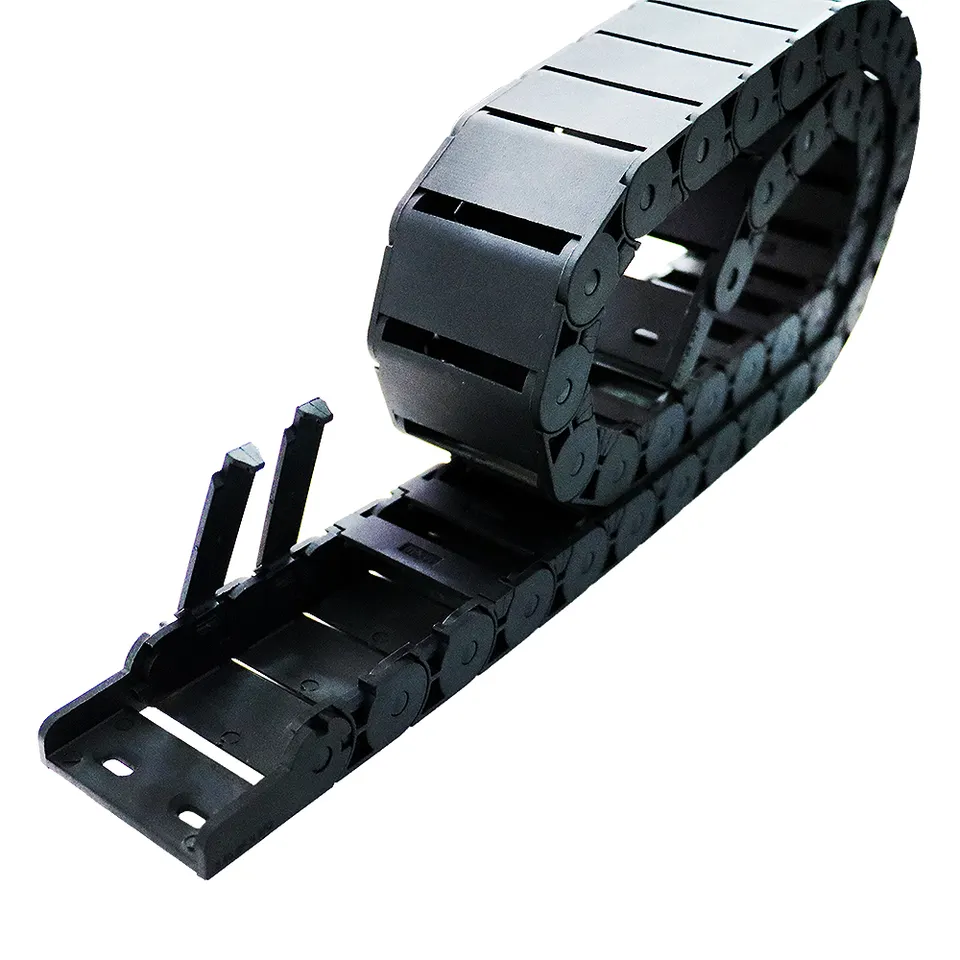
How do drag chains handle side loads and lateral forces?
Drag chains are designed to handle various mechanical forces, including side loads and lateral forces. These forces can occur during the movement of cables and hoses within the drag chain, especially in applications where the drag chain travels along curved or complex paths. Drag chains employ specific design features to effectively manage side loads and lateral forces:
- Rugged Construction: Drag chains are typically constructed from robust and durable materials, such as high-strength plastics or metal alloys. This construction provides the necessary strength and rigidity to withstand side loads and lateral forces without deformation.
- Link Design: The links or segments of the drag chain are often shaped and interconnected to allow for flexible movement while maintaining stability. The design prevents binding or jamming when the chain bends or changes direction.
- Bumper Stops: Many drag chains incorporate bumper stops or dividers within the chain’s interior. These stops help to guide and separate the cables and hoses, preventing them from coming into contact with each other and minimizing the risk of entanglement and wear.
- Tension Management: Proper tension management is essential to ensure smooth movement of the cables and hoses within the drag chain. Tensioning devices or systems can be used to maintain the appropriate level of tension, preventing excessive sagging or bunching that could lead to interference or damage.
- Side Mounting Brackets: In some applications, side mounting brackets can be used to provide additional support to the drag chain, reducing the effects of side loads and lateral forces.
It is crucial to select the appropriate type and size of drag chain for the specific application to ensure it can handle the expected side loads and lateral forces. Regular maintenance, inspection, and lubrication are also essential to prolong the drag chain’s life and optimize its performance in managing mechanical forces during operation.
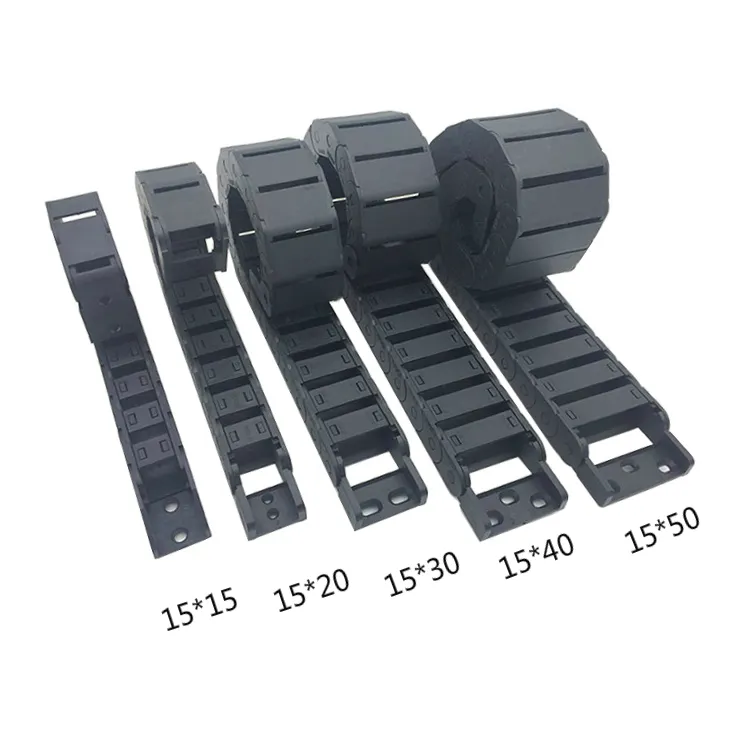
Can drag chains be used in railway and transportation applications?
Yes, drag chains can be used in railway and transportation applications, and they serve essential roles in managing cables and hoses in these industries. Here’s how drag chains are beneficial in such applications:
- Cable Protection: In railway and transportation systems, there are various cables and hoses responsible for communication, control, power supply, and other functions. Drag chains protect these cables from external influences, such as vibrations, impacts, and environmental elements, ensuring their integrity and longevity.
- Space Optimization: In transportation equipment with limited space, drag chains help organize and route cables in a compact and efficient manner. They prevent cable tangling and ensure a neat and tidy cable layout, maximizing the available space and avoiding interference with other components.
- Dynamic Movement: Railway and transportation applications often involve dynamic movements, such as the extension and retraction of parts or the articulation of vehicles. Drag chains are flexible and capable of accommodating these movements while keeping the cables securely contained and protected.
- Reduction of Downtime: By protecting cables and hoses from wear and damage, drag chains contribute to the overall reliability of transportation systems. This reduction in downtime leads to increased operational efficiency and cost savings.
- Resistance to Environmental Conditions: Drag chains are designed to withstand various environmental conditions, including exposure to temperature variations, moisture, dust, and other contaminants. This resilience ensures continuous cable protection and performance even in challenging railway and transportation environments.
- Customizable Solutions: Drag chains come in various sizes, configurations, and materials, allowing for customized solutions that cater to specific transportation equipment requirements.
- Compliance with Industry Standards: Many drag chains used in railway and transportation applications comply with industry standards and regulations, ensuring safe and reliable cable management.
In conclusion, drag chains are a valuable component in railway and transportation applications. They protect cables, optimize space, accommodate dynamic movements, and enhance the overall efficiency and reliability of transportation systems.
How do drag chains perform in continuous motion and high-speed applications?
Drag chains are designed to perform exceptionally well in continuous motion and high-speed applications. They are engineered to withstand the dynamic and repetitive movement of cables and hoses while maintaining their structural integrity and providing reliable cable management.
Performance characteristics of drag chains in continuous motion and high-speed applications:
1. Smooth Cable Movement: Drag chains facilitate smooth movement of cables and hoses during continuous motion and high-speed operations. The design of the chain allows for low-friction movement, reducing the wear on cables and ensuring they glide easily within the chain.
2. Reduced Cable Stress: In high-speed applications, cables can experience significant stress and strain due to constant movement. Drag chains help to minimize cable stress by providing a guided pathway, preventing excessive bending or twisting of the cables.
3. High Acceleration and Deceleration: Drag chains are capable of handling rapid acceleration and deceleration common in high-speed applications. They secure the cables and prevent them from becoming tangled or snagged during quick changes in motion.
4. Wear and Abrasion Resistance: The materials used in drag chains are often wear-resistant and durable, ensuring longevity even in continuous motion scenarios. This resistance to wear and abrasion protects the cables from damage and extends their lifespan.
5. Self-Supporting Design: Drag chains have a self-supporting structure, meaning they can support the weight of cables and hoses without the need for additional support mechanisms. This feature is particularly beneficial in applications with continuous motion and high speeds.
6. Noise and Vibration Dampening: Some drag chains are designed with features that dampen noise and vibration generated during continuous motion. This contributes to a quieter and smoother operation of the machinery or equipment.
7. Temperature Resistance: Drag chains can be manufactured with materials that offer high-temperature resistance, making them suitable for applications where heat is generated during high-speed operations.
8. Low Maintenance: The reliable design of drag chains in continuous motion and high-speed applications minimizes the need for frequent maintenance. They are built to withstand the demands of such environments, reducing downtime and maintenance costs.
In summary, drag chains are engineered to excel in continuous motion and high-speed applications. They ensure the smooth and safe movement of cables and hoses, providing reliable cable management and protection. Their durable construction and resistance to wear make them well-suited for demanding industrial scenarios with rapid and continuous motion.


editor by CX 2024-05-08