
Product Description
Product Description
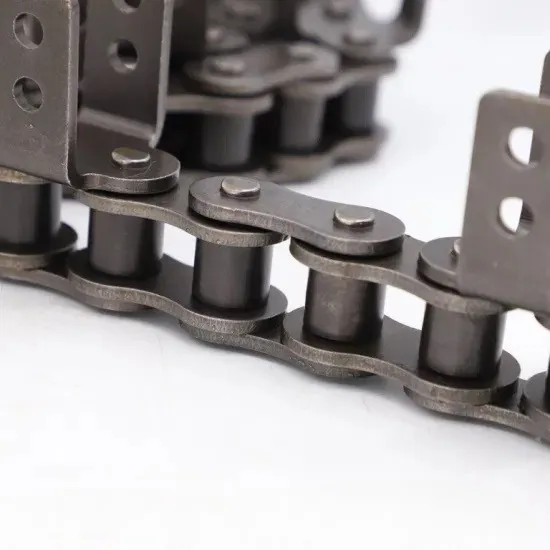
1. Type X458, X348, X678 with trolley
2. Type: 55, 57, 77 forged chain
2. Made of 40Cr material
Dropped Forged Rivetless Chain:
1. HangZhou Vision Chain Transmission Co., Ltd, manufacture excellent quality of all kinds of Forged Chains
2. Dropped Forged Rivettedless chains as X348, X458, X678, XT100, XT160, 468, 698 and 348, 458.678, CC100, 160 TROLLEY
3. Detachable chain, such as 55, 57, 62, 74, 78 etc,
4. Forged link: Sucha as 101.6*36*8, 142*50*19, 142*50*29, 200*50*25 etc,
5. And attachment of 348, 458, 678 etc,
6. Cat Pilar chain /Cat Pilar chain of 348, 458, 678 etc.
7. Welcome your inquiry of Forged chains, our mission is provide our best quality products and best price to every company.
Detailed Photos
Product Parameters
Our Advantages
company-HangZhou-Vision-Chain-Transmission-Co-Ltd-.html
Product Categories
| WHY CHOOSE US |
| Comprehensive Product Portfolio We produce and supply a wide range of power transmission products including drive chains, leaf chains, conveyor chains, agricultural chains, sprockets, and couplings. This one-store-for-all shopping experience will significantly reduce your searching costs while guarantee youfind what you want at 1 click. Value Choice Products Our products are the best combination of quality and price, and you get what Seasoned Sales Associates and Engineers We have 15 seasoned sales associates and 5 engineers; 100% Customer Retention Rate Our regular customers from overseas come back not just for our |
| FAQ |
| Q1: What’s your average lead time? A: It varies. Our regular end-to-end lead time is 1-2 months.. We also provide express shipments for rush orders. For details,please consult our sales associate. Q2: Is your price better than your competitors given the same quality? Q4: Can we inspect the goods before shipment? Q5: What kind of payment method is acceptable for your mill? Q6: What if I have any other questions? |
| Material: | Cast Iron |
|---|---|
| Structure: | Forging |
| Surface Treatment: | Polishing |
| Samples: |
US$ 10/Piece
1 Piece(Min.Order) | Order Sample |
|---|
| Customization: |
Available
| Customized Request |
|---|
.shipping-cost-tm .tm-status-off{background: none;padding:0;color: #1470cc}
|
Shipping Cost:
Estimated freight per unit. |
about shipping cost and estimated delivery time. |
|---|
| Payment Method: |
|
|---|---|
|
Initial Payment Full Payment |
| Currency: | US$ |
|---|
| Return&refunds: | You can apply for a refund up to 30 days after receipt of the products. |
|---|


What are the benefits of using a cast chain in pulp and paper manufacturing?
In the pulp and paper manufacturing industry, cast chains offer several benefits that make them well-suited for various applications within the production process. Pulp and paper mills involve handling heavy loads, abrasive materials, and continuous operations, and cast chains excel in meeting these challenges. Here are some of the key advantages of using cast chains in pulp and paper manufacturing:
- Strength and Durability: Cast chains are designed to handle heavy loads and provide high tensile strength, making them ideal for conveying large amounts of raw materials and finished paper products throughout the manufacturing process.
- Resistance to Abrasion: The materials used in cast chains, such as heat-treated alloy steel, offer excellent resistance to abrasive materials found in the wood processing and papermaking operations.
- Reliability: Pulp and paper mills operate continuously to maintain productivity. Cast chains provide reliable and consistent performance, reducing the risk of unexpected downtime.
- Customization: Cast chains can be tailored to fit specific equipment and applications within the pulp and paper manufacturing process, ensuring optimal functionality and efficiency.
- Long Service Life: Cast chains have a longer operational life compared to some other chain types, resulting in reduced maintenance and replacement costs over time.
- Reduced Maintenance: With their robust construction, cast chains require less frequent maintenance, making them suitable for demanding industrial settings.
In pulp and paper manufacturing, cast chains are commonly used in various applications, including log conveying, chip handling, debarking, pulping, washing, and paper machine sections. Their ability to withstand the harsh operating conditions and efficiently handle heavy loads makes them a reliable choice for the industry.
It’s important to ensure proper lubrication and regular inspection of cast chains to maintain their performance and extend their service life in the challenging pulp and paper manufacturing environment.
What are the environmental considerations when using cast chains?
When using cast chains, there are several important environmental considerations to keep in mind:
- Corrosive Environments: In environments with high levels of moisture, chemicals, or other corrosive agents, it’s crucial to select cast chains that have appropriate corrosion resistance. Stainless steel or special coatings can be used to enhance the chain’s resistance to corrosion.
- Temperature Extremes: Extreme temperatures can impact the performance and lifespan of cast chains. In high-temperature environments, chains with heat-resistant materials or coatings should be chosen. Conversely, in low-temperature conditions, chains must remain flexible and not become brittle.
- Abrasive Conditions: Some applications involve exposure to abrasive materials like sand, dirt, or gravel. Cast chains should have high wear resistance to withstand the abrasive nature of these environments.
- Chemical Exposure: Certain industries may involve exposure to chemicals that could potentially degrade the chain’s material. Selecting chains with chemical-resistant materials is essential in such cases.
- Contaminants: Environments with contaminants, such as dust or debris, can affect the performance of cast chains. Regular cleaning and lubrication are necessary to prevent debris from causing excessive wear.
Choosing the right type of cast chain based on the specific environmental conditions it will be exposed to is crucial for ensuring the chain’s longevity and reliable operation in industrial applications.
What are the different types of cast chains available in the market?
There are several types of cast chains available in the market, each designed for specific industrial applications. The main types of cast chains include:
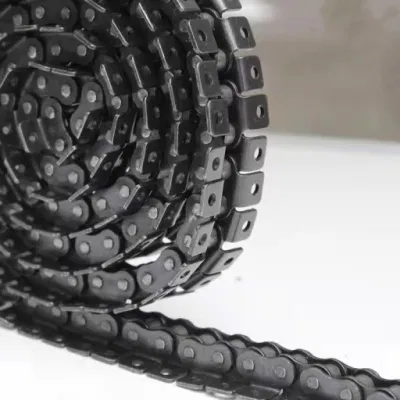
1. Cast Link Chains: Cast link chains are a common type of cast chain and consist of individual links cast from metal. They are widely used in heavy-duty applications, such as mining, lumber, and steel industries, where high strength and reliability are crucial.
2. Drag Chains: Drag chains, also known as drag link chains, are designed for use in drag conveyors. They have a series of interlocking links that can efficiently move bulk materials along a conveyor line. Drag chains are often used in industries dealing with granular materials, such as agriculture and mining.
3. Apron Chains: Apron chains, sometimes referred to as apron pan chains, are commonly used in apron conveyors. These chains have overlapping pans or plates that form a continuous conveying surface. Apron chains are suitable for transporting heavy and abrasive materials, as encountered in the cement and steel industries.
4. Bucket Elevator Chains: Bucket elevator chains are used in vertical lifting applications, such as elevators used for handling bulk materials like grains, minerals, and aggregates. These chains have specially designed attachments that carry buckets, providing a reliable and efficient lifting solution.
5. Scraper Chains: Scraper chains are widely used in scraper conveyors and scraper systems for material handling in industries like mining and wastewater treatment. They are designed to move materials along the conveyor path while scraping any residual material from the surface.
6. Trolley Chains: Trolley chains are used in overhead trolley systems to move heavy loads horizontally along a fixed path. These chains offer high load-carrying capacity and are often utilized in assembly lines and material storage areas.
7. Sprocket Chains: Sprocket chains work in conjunction with sprockets to transfer power in various machinery and equipment. They are commonly used in industrial settings where reliable power transmission is essential.
The choice of cast chain type depends on the specific application requirements, including load capacity, speed, environmental conditions, and material characteristics. Manufacturers offer a variety of cast chains with different configurations and specifications to meet the diverse needs of industrial sectors.


editor by CX 2023-10-16