
Product Description
Drag Slat Chains
Chains produce numerous types of conveyor and elevator chain for construction equipment and Asphalt plant manufacturers. This has become a specialist market where various types of Drag slat, Conveyor and Elevator chains can be produced to customers specific requirements.
The principal applications include hot stone elevating with chain and buckets from the dryer, drag slat for asphalt transport often to heated bins, inclined pan systems typically seen in batch plants and various drag bar chains used in pavers.
Drag Slat Chains
Chains produce numerous types of conveyor and elevator chain for construction equipment and Asphalt plant manufacturers. This has become a specialist market where various types of Drag slat, Conveyor and Elevator chains can be produced to customers specific requirements.
Detailed parameters of the chain
JKR2870/MIX3
Chains produce numerous types of conveyor and elevator chain for construction equipment and Asphalt plant manufacturers.
drag slat conveyors are manufactured from 2 cold-cambered bridge Ibeams making them the strongest conveyors in the world.
JKR2868/K2X3/CR
The use of conveyor chains is synonymous with Asphalt production where hot handling and abrasion make chains a pre-requisite.
The principal applications include hot stone elevating with chain and buckets from the dryer, drag slat for asphalt transport often to heated bins, inclined pan systems typically seen in batch plants and various drag bar chains used in pavers.
In addition to existing chain series, equipment manufacturers have over the years introduced their own standards within their equipment which has seen the development of a wide range of styles and types.
All chains are similar in application , but vary in terms of dimensions and materials employed.
| Drag Slat Chains
|
JKR2870/MIX3 |
|
Drag Slat Chains |
JKR2868/K2X3/CR |
The needs of users, is our pursuit, to provide users with the most suitable products, to provide practical service, is our firm belief, also is our “humanist, the good faith management” principle.
Besides, our after service will solve any problems when you meet them in time.
The welcome new old customer comes the electricity consultation discussion to purchase wholeheartedly.
| Standard or Nonstandard: | Standard |
|---|---|
| Application: | Conveyer Equipment |
| Surface Treatment: | Baking Paint |
| Samples: |
US$ 36/Meter
1 Meter(Min.Order) | Order Sample |
|---|
| Customization: |
Available
| Customized Request |
|---|
.shipping-cost-tm .tm-status-off{background: none;padding:0;color: #1470cc}
|
Shipping Cost:
Estimated freight per unit. |
about shipping cost and estimated delivery time. |
|---|
| Payment Method: |
|
|---|---|
|
Initial Payment Full Payment |
| Currency: | US$ |
|---|
| Return&refunds: | You can apply for a refund up to 30 days after receipt of the products. |
|---|
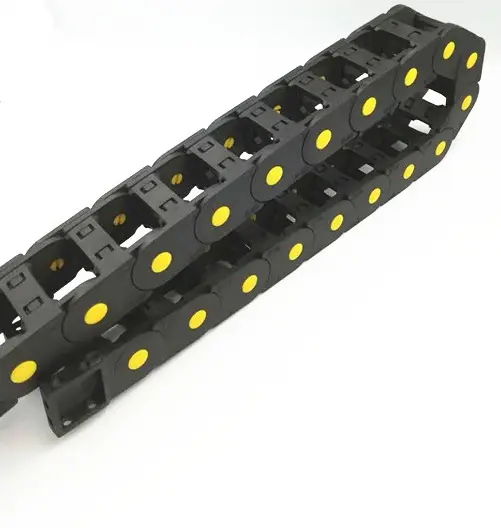
Can drag chains be used in the pharmaceutical and medical device manufacturing industry?
Yes, drag chains can be used in the pharmaceutical and medical device manufacturing industry, and they offer several benefits in this specific application. Here’s why:
- Cable Protection: In pharmaceutical and medical device manufacturing, there are often numerous cables and hoses that need to be protected and organized. Drag chains provide a reliable and efficient way to route and protect these cables, preventing tangling and potential damage during the manufacturing process.
- Cleanliness and Hygiene: Drag chains made from materials like stainless steel or special plastics can meet the industry’s stringent cleanliness and hygiene requirements. They are easy to clean and can withstand regular washdowns, ensuring a contamination-free manufacturing environment.
- Smooth Movement: Drag chains ensure smooth and consistent movement of cables and hoses, which is crucial in delicate medical device manufacturing processes where precision and accuracy are essential.
- Reduced Downtime: By organizing and protecting cables, drag chains help reduce the risk of cable damage and downtime due to cable-related issues. This leads to increased productivity and cost savings in the long run.
- Compliance: Drag chains can be designed to meet specific industry standards and regulations, ensuring compliance with safety and quality requirements in pharmaceutical and medical device manufacturing.
- Space Efficiency: Drag chains help in neatly organizing cables and hoses in a compact manner, optimizing the use of space in manufacturing equipment and reducing clutter.
Overall, drag chains play a crucial role in maintaining the efficiency, cleanliness, and safety of cable management in pharmaceutical and medical device manufacturing, making them a valuable component in this industry.
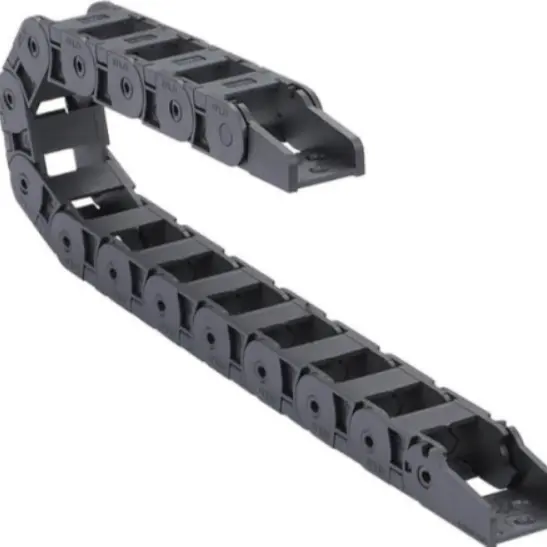
How do drag chains handle cable routing and cable organization?
Drag chains play a crucial role in cable routing and cable organization in various industrial applications. They are designed to efficiently manage and protect cables and hoses, ensuring smooth movement and preventing damage. Here’s how drag chains handle cable routing and organization:
Enclosed Cable Routing:
Drag chains provide an enclosed pathway for cables and hoses, keeping them organized and preventing tangling or entanglement. This enclosed design ensures that cables are neatly arranged and protected from external elements, such as dust, debris, and contaminants.
Smooth Cable Movement:
The interior of drag chains is designed to provide smooth movement for the cables and hoses passing through them. This reduces friction and minimizes wear and tear on the cables, prolonging their lifespan and ensuring reliable operation.
Multiple Cable Compartments:
Many drag chains have multiple compartments, allowing for the separation and organization of different types of cables and hoses. This makes it easier to identify and replace specific cables when needed, streamlining maintenance and reducing downtime.
Adaptability to Cable Sizes:
Drag chains can accommodate various cable sizes and types, making them versatile and suitable for a wide range of applications. The chains can be customized to fit specific cable diameters, ensuring a secure and snug fit for each cable passing through.
Protection from Hazards:
Drag chains shield cables and hoses from potential hazards, such as sharp edges, moving machine parts, or exposure to chemicals. This protection prevents damage and ensures the safety of both cables and personnel working near the equipment.
Cable Length Compensation:
As machines and equipment move, the cables and hoses within them need flexibility to adjust to different positions. Drag chains provide the necessary cable length compensation, allowing the cables to extend and retract smoothly without becoming tangled or causing strain.
Preventing Cable Clutter:
By keeping cables and hoses organized within the drag chain, cable clutter is minimized. This not only improves the overall aesthetics of the equipment but also makes it easier to identify and troubleshoot any cable-related issues.
Overall, drag chains are essential components in industrial cable management systems. They streamline cable routing, protect cables from damage, and ensure smooth movement, contributing to the efficient and reliable operation of machinery and equipment in various industries.
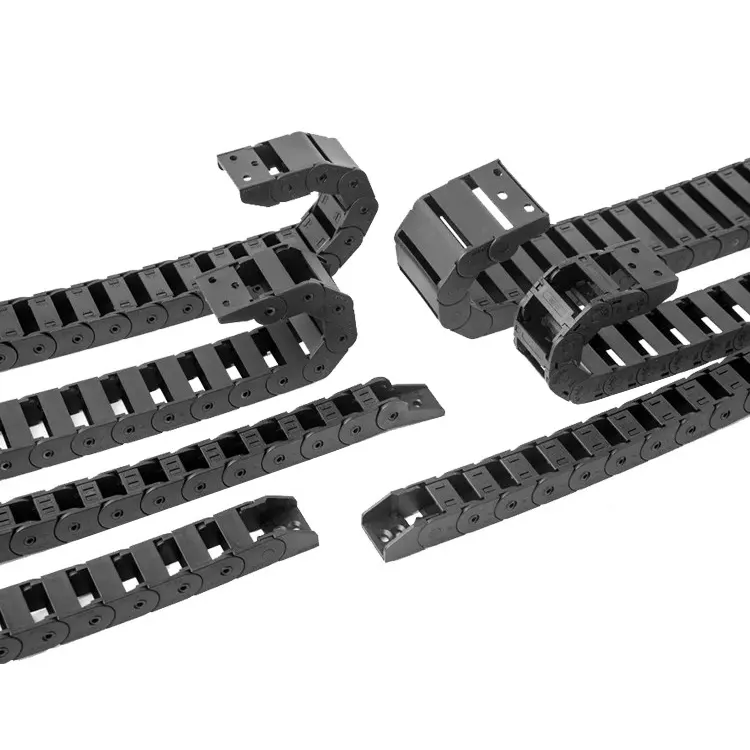
What industries commonly utilize drag chains for cable management?
Drag chains are widely used in various industries for effective cable and hose management. Some of the common industries that utilize drag chains include:
1. Automation and Robotics:
In automation and robotic systems, drag chains play a vital role in guiding and protecting cables that power and control the machinery’s movements. They ensure smooth cable management and prevent tangling or snagging, contributing to the reliable operation of automated processes.
2. Machine Tools:
In machine tool applications, drag chains manage the cables and hoses that supply power and coolant to various components. They keep the cables organized and prevent damage from debris or moving machine parts, ensuring the machine’s efficiency and longevity.
3. Material Handling:
In material handling equipment such as conveyors, cranes, and forklifts, drag chains are used to manage power and control cables, as well as hydraulic hoses. They protect the cables from external elements, such as dust and debris, and contribute to safe and efficient material handling operations.
4. Packaging and Printing:
In packaging and printing industries, drag chains are employed to manage cables and hoses that control the packaging machinery and printing equipment. They prevent cable damage during repeated movements and ensure continuous and reliable production.
5. Automotive Manufacturing:
In automotive assembly lines, drag chains are used to manage cables that power robotic arms, conveyors, and other automated equipment. They provide a safe and organized cable management solution, contributing to efficient and precise manufacturing processes.
6. Energy and Utilities:
In power generation plants and utilities, drag chains manage cables for transmitting electricity, control signals, and data. They protect the cables from harsh environments and mechanical stress, ensuring reliable power distribution and control.
7. Aerospace and Aviation:
In the aerospace industry, drag chains are utilized in aircraft manufacturing and maintenance to manage cables and hoses for various systems, including hydraulics and electrical controls. They help maintain the integrity and functionality of critical aircraft components.
8. Mining and Construction:
In mining and construction equipment, drag chains are used to manage cables that power heavy machinery and control various functions. They offer protection from harsh environments and ensure uninterrupted operations.
9. Food and Beverage:
In food processing and beverage industries, drag chains are used to manage cables and hoses in conveyor systems and automated machinery. They meet strict hygiene standards and ensure smooth production processes.
10. Marine and Offshore:
In marine and offshore applications, drag chains manage cables and hoses on ships and offshore platforms, providing protection in demanding environments and marine conditions.
These industries are just a few examples of where drag chains are commonly used for efficient cable and hose management. Drag chains offer a reliable solution for protecting and organizing cables, ensuring safe and smooth operations in various industrial applications.


editor by CX 2023-10-21