
Product Description
Large Conveyor Factory Custom Large Capacity Sawdust Chain Drag
Product Description
Drag conveyor (also called drag chain conveyor) is 1 of the commonly used material handing equipment for grain storage silos, it is a light enmasse conveyor which is widely applied for food or grain handling. The drag conveyor is a continuous conveying transportation equipment with a rectangular cross-section connected with the moving chain. Drag chain conveyor is widely used to
transport the particles and powdered material horizontally, it also can be used for transport obliquely and vertically.
The drag conveyor does not produce dust and cause no environmental pollution because of the whole sealing of the closed trough, so it can improve the worker operating conditions and can’t cause food scatter when used in the outside. It is also free from weather conditions.Meanwhile, It is capable of executing both single point and multi-point feeding and discharging. In some conditions, it has some prominent advantages for the toxic, explosive, high temperature materials transportation. It can also be applied for flying material transportation to protect working conditions and prevent environment pollution.
Specification
|
Model |
Groove width*height |
Capacity(T/H) |
Chain speed(M/S) |
|
TGSS16 |
160*160 |
15-28 |
0.4-0.6 |
|
TGSS20 |
200*200 |
29-56 |
0.4-0.6 |
|
TGSS25 |
250*250 |
56-84 |
0.4-0.6 |
|
TGSS32 |
320*320 |
85-140 |
0.4-0.6 |
|
TGSS40 |
400*400 |
141-211 |
0.4-0.6 |
|
TGSS50 |
500*400 |
212-281 |
0.4-0.6 |
Features
* High performance, easy to operate, easy to maintain
* Stable running, low noise and long service life
* Thread rod type takeup (tensioner) can be fitted at the tail so as to meet various conveying requirements
* Flexible for multi-point feeding and discharging
* Equipped with an alarming device for material blockage
* Devices for speed loss and chain breakage protection are optional
Details Images
(1)The machine head is made up with the main body boxdrive sprocketGear box. transmission sprocket.Chain and drags.
(2) The tail is made up with main body boxsprockettensioning device.
(3)The intermediate body is made up with the tube,slide rail,chain & drags,machine cover etc.
(4)The inlet and outlet are made up with the flange and connecting joints used for input or discharge of the grain.
(5) Chain has T and V type,it is the main part of the conveyor for transportation of the grain.
Applications
Drag conveyors are suitable for conveying bulk food, oil, feed and other bulk materials. They are widely used in sea port, dock,grain depot and the malt, flour, brewery, feed and chemical industries for horizontal bulk material conveying.
Product packaging
Company Profile
Shelley Engineering Co., Ltd. is a company professionally produce and sell grain storage silos. As the main supplier of steel farms and commercial storage bins and silos in China, we offer the most technologically advanced grain dryers in the industry and a large selection of material handling systems, including sweep augers, drying and cleaning systems, commercial bucket elevators and conveyors.
Our clients come from mainland China, Ukraine, Poland, Australia, Argentina, Sudan, Vietnam, Korea, Thailand, Iran and Honduras. We welcome more and more clients to visit our factory. We research and develop a large number of new products every year. “Quality and reputation is the first” is our policy. We welcome friends from all over the world to cooperate with us for a prosperous future. Please feel free to contact us for further information.
| After-sales Service: | Provided |
|---|---|
| Warranty: | Provided |
| Structure: | Conveyor System |
| Material: | Stainless Steel |
| Material Feature: | Heat Resistant |
| Application: | Grain Transport |
| Customization: |
Available
| Customized Request |
|---|
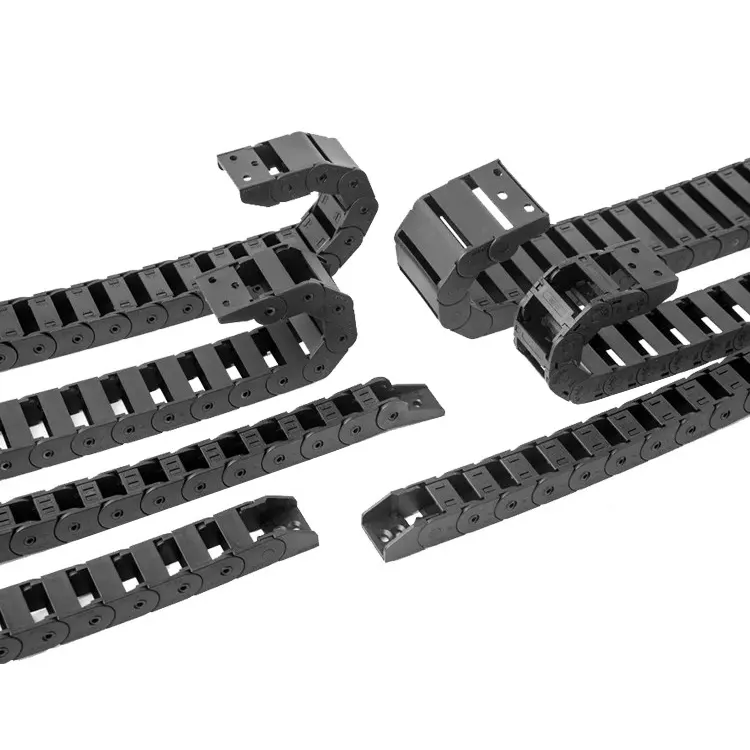
What are the temperature limits for drag chains in extreme environments?
Drag chains are designed to operate in a wide range of temperatures, but their temperature limits can vary depending on the materials used in their construction. In extreme environments, such as those with high or low temperatures, it is essential to select the appropriate drag chain that can withstand the specific conditions. Here are some general temperature guidelines for drag chains:
- Standard Drag Chains: Most standard drag chains can typically handle temperatures ranging from -40°C to 80°C (-40°F to 176°F). These are suitable for many industrial applications with moderate temperature variations.
- High-Temperature Drag Chains: For applications that involve higher temperatures, specialized high-temperature drag chains are available. These can handle temperatures up to 250°C (482°F) or even higher, depending on the materials used, making them suitable for use in hot environments like foundries or ovens.
- Low-Temperature Drag Chains: In cold environments, where temperatures can drop significantly below freezing, low-temperature drag chains are used. These can withstand temperatures as low as -50°C (-58°F) and are commonly used in freezer storage systems or cold storage facilities.
- Heat-Resistant Materials: Drag chains can be manufactured using various heat-resistant materials, such as stainless steel, special plastics, or composite materials, to withstand extreme temperature conditions without compromising their performance.
It is crucial to consult with the drag chain manufacturer or supplier to ensure that the selected drag chain is suitable for the specific temperature range of the environment in which it will be used. Using drag chains with appropriate temperature limits helps to maintain reliable cable protection and system performance even in extreme conditions.
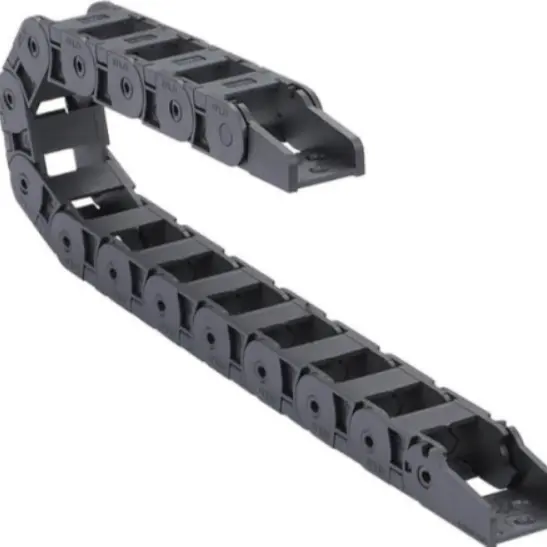
How do drag chains handle cable routing and cable organization?
Drag chains play a crucial role in cable routing and cable organization in various industrial applications. They are designed to efficiently manage and protect cables and hoses, ensuring smooth movement and preventing damage. Here’s how drag chains handle cable routing and organization:
Enclosed Cable Routing:
Drag chains provide an enclosed pathway for cables and hoses, keeping them organized and preventing tangling or entanglement. This enclosed design ensures that cables are neatly arranged and protected from external elements, such as dust, debris, and contaminants.
Smooth Cable Movement:
The interior of drag chains is designed to provide smooth movement for the cables and hoses passing through them. This reduces friction and minimizes wear and tear on the cables, prolonging their lifespan and ensuring reliable operation.
Multiple Cable Compartments:
Many drag chains have multiple compartments, allowing for the separation and organization of different types of cables and hoses. This makes it easier to identify and replace specific cables when needed, streamlining maintenance and reducing downtime.
Adaptability to Cable Sizes:
Drag chains can accommodate various cable sizes and types, making them versatile and suitable for a wide range of applications. The chains can be customized to fit specific cable diameters, ensuring a secure and snug fit for each cable passing through.
Protection from Hazards:
Drag chains shield cables and hoses from potential hazards, such as sharp edges, moving machine parts, or exposure to chemicals. This protection prevents damage and ensures the safety of both cables and personnel working near the equipment.
Cable Length Compensation:
As machines and equipment move, the cables and hoses within them need flexibility to adjust to different positions. Drag chains provide the necessary cable length compensation, allowing the cables to extend and retract smoothly without becoming tangled or causing strain.
Preventing Cable Clutter:
By keeping cables and hoses organized within the drag chain, cable clutter is minimized. This not only improves the overall aesthetics of the equipment but also makes it easier to identify and troubleshoot any cable-related issues.
Overall, drag chains are essential components in industrial cable management systems. They streamline cable routing, protect cables from damage, and ensure smooth movement, contributing to the efficient and reliable operation of machinery and equipment in various industries.
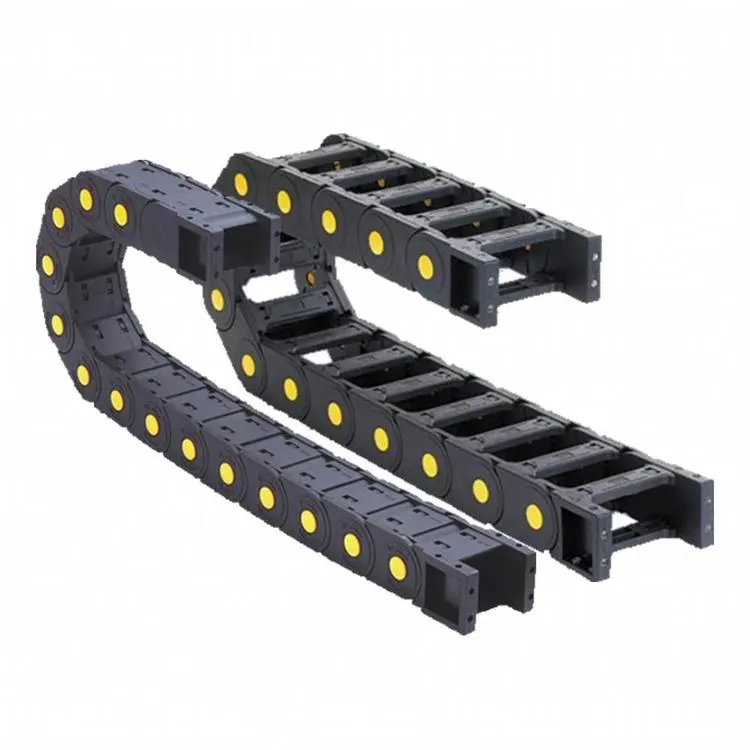
How do drag chains handle various cable sizes and types?
Drag chains are designed to accommodate various cable sizes and types, making them versatile and suitable for a wide range of industrial applications. Here’s how they handle different cable sizes and types:
Adjustable Design:
Most drag chains have an adjustable design, allowing users to customize the interior space according to the size and quantity of cables they need to house. The chain links or separators can be removed or repositioned to create the desired amount of space for the cables, ensuring a snug fit and minimizing any excess space that may cause cable movement or wear.
Wide Range of Sizes:
Drag chains are available in various sizes, ranging from small ones suitable for lightweight cables to large ones capable of holding numerous thick and heavy cables. Manufacturers provide size charts and specifications to help users select the right drag chain size based on their cable requirements and the dimensions of the equipment.
Cable Comb and Strain Relief:
Some drag chains come with built-in cable combs or strain relief features. The cable combs are designed to organize and separate individual cables within the chain, preventing them from tangling or interfering with each other. The strain relief elements ensure that cables are properly secured and protected from excessive tension or bending that could cause damage.
Various Mounting Options:
Drag chains can be mounted in various ways, such as on the floor, on the side of machinery, or overhead. The mounting method chosen can impact the available space for cables and the overall arrangement within the drag chain. Manufacturers offer different mounting brackets and accessories to accommodate diverse cable routing needs.
Cable Material and Flexibility:
Drag chains are designed to work with a wide range of cable materials, including PVC, rubber, TPU, and more. The flexibility of these materials allows them to move smoothly within the chain, even during dynamic operations. The drag chain’s design helps minimize cable wear by providing a smooth surface and eliminating sharp edges that could damage the cables.
Overall, drag chains provide an effective cable management solution that can handle various cable sizes and types. Their customizable and adaptable design, combined with the ability to protect and guide cables during motion, makes them an essential component for ensuring the reliability and longevity of cables in industrial machinery and automated systems.


editor by CX 2023-10-11