
Product Description
Drag Slat Chains
Chains produce numerous types of conveyor and elevator chain for construction equipment and Asphalt plant manufacturers. This has become a specialist market where various types of Drag slat, Conveyor and Elevator chains can be produced to customers specific requirements.
The principal applications include hot stone elevating with chain and buckets from the dryer, drag slat for asphalt transport often to heated bins, inclined pan systems typically seen in batch plants and various drag bar chains used in pavers.
Drag Slat Chains
Chains produce numerous types of conveyor and elevator chain for construction equipment and Asphalt plant manufacturers. This has become a specialist market where various types of Drag slat, Conveyor and Elevator chains can be produced to customers specific requirements.
Detailed parameters of the chain
JKR2870/MIX3
Chains produce numerous types of conveyor and elevator chain for construction equipment and Asphalt plant manufacturers.
drag slat conveyors are manufactured from 2 cold-cambered bridge Ibeams making them the strongest conveyors in the world.
JKR2868/K2X3/CR
The use of conveyor chains is synonymous with Asphalt production where hot handling and abrasion make chains a pre-requisite.
The principal applications include hot stone elevating with chain and buckets from the dryer, drag slat for asphalt transport often to heated bins, inclined pan systems typically seen in batch plants and various drag bar chains used in pavers.
In addition to existing chain series, equipment manufacturers have over the years introduced their own standards within their equipment which has seen the development of a wide range of styles and types.
All chains are similar in application , but vary in terms of dimensions and materials employed.
| Drag Slat Chains
|
JKR2870/MIX3 |
|
Drag Slat Chains |
JKR2868/K2X3/CR |
The needs of users, is our pursuit, to provide users with the most suitable products, to provide practical service, is our firm belief, also is our “humanist, the good faith management” principle.
Besides, our after service will solve any problems when you meet them in time.
The welcome new old customer comes the electricity consultation discussion to purchase wholeheartedly.
|
Shipping Cost:
Estimated freight per unit. |
To be negotiated |
|---|
| Standard or Nonstandard: | Standard |
|---|---|
| Application: | Conveyer Equipment |
| Surface Treatment: | Baking Paint |
| Samples: |
US$ 36/Meter
1 Meter(Min.Order) | Order Sample |
|---|
| Customization: |
Available
| Customized Request |
|---|
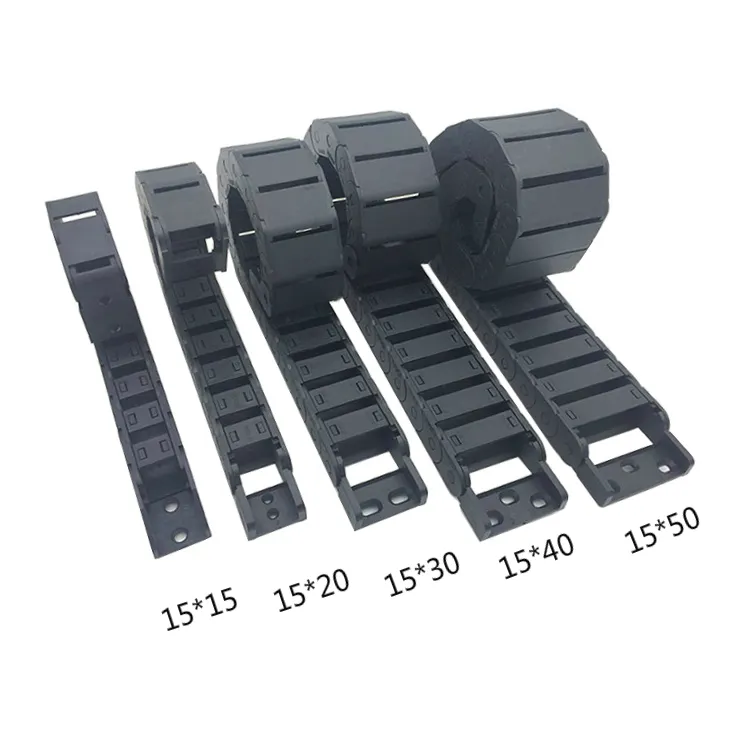
Can drag chains be used in cleanroom environments for sensitive industries?
Yes, drag chains can be used in cleanroom environments for sensitive industries. Cleanrooms are controlled environments that are designed to minimize the presence of airborne particles, dust, and other contaminants. These environments are commonly found in industries such as semiconductor manufacturing, pharmaceuticals, biotechnology, aerospace, and electronics, where even the smallest particles can have a significant impact on product quality and performance.
When using drag chains in cleanroom settings, it is crucial to select drag chains that are specifically designed for such environments. Here are some considerations:
- Particle Emissions: Drag chains used in cleanroom environments should have low particle emissions to prevent contamination. Drag chains made from materials like stainless steel or self-lubricating polymers are often preferred as they generate fewer particles during movement.
- Smooth and Sealed Design: The drag chain design should be smooth and free of crevices or pockets where particles could accumulate. Sealed or closed designs are preferred to prevent the ingress or egress of particles.
- Easy Cleaning and Maintenance: Drag chains should be easy to clean and maintain to minimize the risk of particle accumulation over time. Regular cleaning and maintenance procedures are essential to uphold the cleanroom’s integrity.
- Chemical Resistance: Depending on the industry, drag chains may be exposed to various cleaning agents and chemicals. The chosen drag chain material should be resistant to these substances to maintain its integrity and prevent contamination.
By using drag chains specifically designed for cleanroom environments, industries can ensure that their sensitive manufacturing processes are protected from particle contamination. Regular inspection, cleaning, and maintenance of the drag chains will help maintain the cleanroom’s required cleanliness levels and prevent any potential issues that could impact product quality.
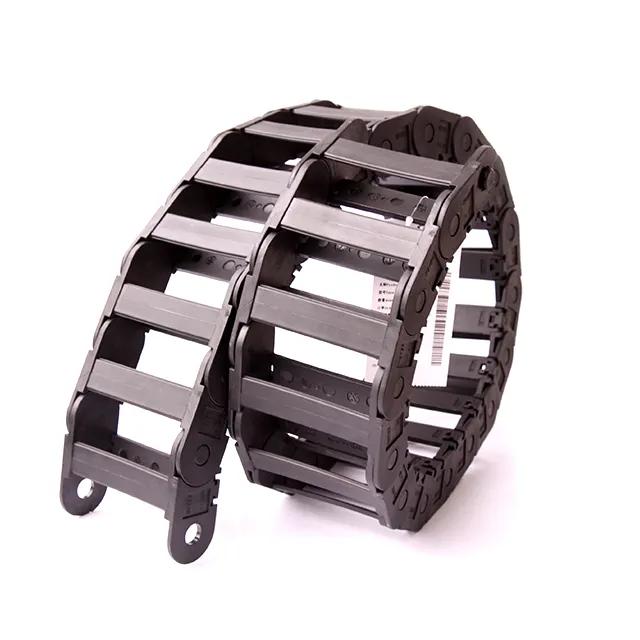
What are the benefits of using a plastic drag chain in certain environments?
Plastic drag chains offer several advantages in specific environments and applications due to their unique characteristics. Here are the key benefits:
Lightweight:
Plastic drag chains are lightweight compared to metal alternatives. This makes them ideal for applications where weight is a concern, such as in robotics and automation systems. The reduced weight helps in improving the overall performance and efficiency of the equipment.
Corrosion Resistance:
Plastics are naturally resistant to corrosion, making plastic drag chains suitable for environments where exposure to moisture, chemicals, or corrosive substances is a concern. They can withstand harsh conditions without deteriorating over time.
Low Friction:
Plastic drag chains have a low coefficient of friction, which reduces the wear and tear on cables and hoses as they move within the chain. The smooth surface of plastic helps in maintaining the integrity of the cables and ensures their long life.
Quiet Operation:
Compared to metal drag chains, plastic drag chains produce less noise during operation. This is especially beneficial in environments where noise reduction is essential, such as in laboratories, cleanrooms, and other noise-sensitive areas.
Chemical Resistance:
Plastic drag chains can withstand exposure to a wide range of chemicals and solvents without degradation. This makes them suitable for industries that handle aggressive chemicals or where chemical spills are possible.
Cost-Effective:
Plastic drag chains are often more affordable than their metal counterparts. For budget-conscious applications or projects with specific cost constraints, plastic drag chains provide a cost-effective cable management solution without compromising on performance.
Easy Installation and Maintenance:
Plastic drag chains are easy to install and require minimal maintenance. They do not require lubrication, and their self-lubricating properties contribute to smooth movement and long service life.
Electrical Insulation:
As plastics are electrical insulators, plastic drag chains provide an added layer of protection for electrical cables and wires. They help in preventing electrical interference and ensure the safety of the equipment and operators.
It’s important to note that while plastic drag chains offer numerous benefits, their selection should be based on the specific requirements of the application and the environmental conditions they will be exposed to. In certain environments, such as those with extremely high temperatures or heavy loads, metal drag chains may still be the preferred choice due to their higher temperature and load capacities.
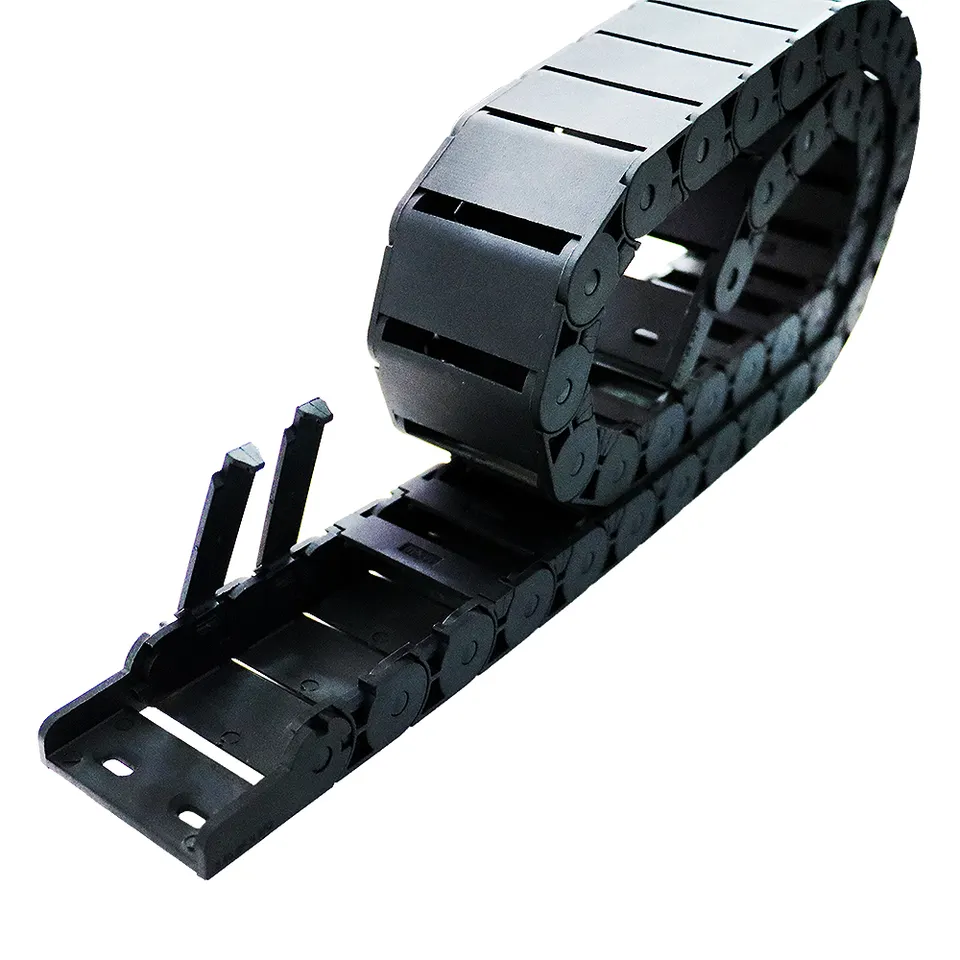
What is a drag chain and how is it used in cable management systems?
A drag chain, also known as a cable carrier or cable chain, is a device used in cable management systems to protect and guide cables and hoses in various industrial applications. It is designed to prevent tangling, bending, and abrasion of cables, ensuring smooth and reliable cable movement.
Drag chains typically consist of interconnected links or compartments that form a flexible chain-like structure. These links encase the cables and allow them to move freely within the chain while providing a protective housing. The drag chain is usually made from materials like plastic or metal, depending on the specific application requirements.
In cable management systems, drag chains are mounted on machinery or equipment that require frequent movement, such as robotic arms, CNC machines, and automated manufacturing systems. The drag chain’s primary function is to manage and organize cables and hoses that need to flex and move along with the machine’s motion.
Here’s how drag chains are used in cable management systems:
- Protection: Drag chains protect cables and hoses from mechanical stress, exposure to environmental elements, and potential damage caused by sharp edges or moving parts.
- Guidance: They guide the cables and hoses along a predefined path, preventing them from tangling or getting caught in the machinery, ensuring smooth and reliable movement.
- Space-saving: By organizing and containing all the cables within the chain, drag chains help optimize space and keep the work area tidy and safe.
- Longevity: Drag chains extend the lifespan of cables and hoses by reducing wear and tear, minimizing the risk of premature failure.
- Flexibility: The chain’s design allows it to flex and move in various directions, accommodating different machine movements without causing strain on the cables.
Overall, drag chains play a crucial role in maintaining the integrity and functionality of cables and hoses in cable management systems, contributing to improved machine performance, safety, and efficiency.


editor by CX 2023-08-15