
Product Description
Made to Order Cast Iron Steel Drop Forged Chain 442, 445, 452
Product Description
The drop forged chain is mainly composed of 3 drop forged components that are the pin roll, middle chain ring, and the outer chain sidebar. It can be conveniently assembled and disassembled, completely by hand without tools. For instance, the assembly can be easily completed by passing the outer sidebar through the middle chain ring, and then rotate the middle chain ring for 90 degrees to engage with the pin roll.
When the chain forms into a ring, it can be utilized as a conveyor chain for heavy loads. Our drop forged chain is often found on the conveying equipment and suspension equipment, in automobile, food processing, and steelmaking industries.
Our company is the lagrest drop forged chain manufacturer. The main products are standard drop forged chain.
| No. | Pitch | Bush diameter | Width between inner plates | Pin diameter | Pin length | plate depth | Average tensile strength | Weight per meter | 10FT LINKS |
| P | d1 max | b1 Min |
d2 max | L max | h2 max | Q min | q | NO. | |
| mm | mm | mm | mm | mm | mm | N | Kg/m | LINKS | |
| 442 | 34.93 | 14.29 | 15.88 | 7.94 | 50.80 | 19.05 | 3402 | 2.23 | 88 |
| 445 | 41.40 | 15.88 | 17.46 | 7.94 | 50.80 | 19.05 | 3402 | 2.38 | 74 |
| 452 | 38.25 | 17.46 | 15.88 | 9.26 | 56.36 | 21.43 | 3969 | 3.27 | 80 |
| 455 | 41.40 | 15.88 | 17.46 | 9.26 | 57.94 | 21.43 | 4139 | 3.13 | 74 |
| 462 | 41.50 | 18.26 | 20.64 | 11.11 | 65.09 | 23.81 | 5103 | 4.02 | 73 |
| 467 | 58.62 | 16.67 | 9.53 | 7.94 | 56.36 | 19.84 | 3402 | 2.23 | 52 |
| 477 | 58.62 | 20.64 | 17.46 | 11.11 | 64.29 | 25.40 | 5443 | 3.27 | 52 |
| 488 | 66.27 | 22.23 | 23.81 | 11.11 | 100.00 | 23.81 | 6237 | 4.61 | 46 |
| 4103 | 78.11 | 30.96 | 28.58 | 19.05 | 87.31 | 38.10 | 12474 | 9.23 | 39 |
| 4124 | 103.20 | 43.66 | 31.75 | 20.64 | 120.65 | 44.45 | 18711 | 13.69 | 30 |
View more products,please click here…
Company Profile
| Application: | Machinery Parts |
|---|---|
| Machining: | Forging Die |
| Material: | Iron |
| Surface Treatment: | Oxygenation |
| Design: | 3D or 2D |
| Casting Tolerance: | +/-0.2mm |
| Samples: |
US$ 0/Meter
1 Meter(Min.Order) | |
|---|
| Customization: |
Available
| Customized Request |
|---|

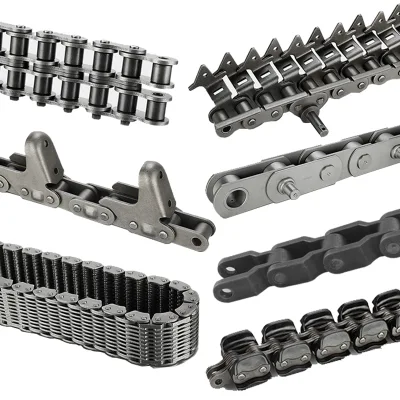
How do cast chains handle reverse motion or anti-reverse requirements?
Cast chains are designed to handle reverse motion or anti-reverse requirements in various industrial applications. These chains are equipped with specific features that allow them to perform effectively under such conditions:
- Specialized Link Design: Cast chains typically have a unique link design that prevents the chain from slipping or disengaging when subjected to reverse motion. The links interlock securely, ensuring smooth and reliable operation in both directions.
- Backstop Devices: In some applications where anti-reverse capability is crucial, additional backstop devices may be integrated with the cast chain system. These devices prevent the chain from moving backward, providing a reliable braking mechanism.
- High-Quality Materials: Cast chains are manufactured from high-quality alloy steel or other robust materials, which enhances their overall strength and ensures they can withstand the stresses associated with reverse motion.
- Precise Manufacturing: The manufacturing process for cast chains is carefully controlled to maintain tight tolerances and accurate dimensions. This precision ensures smooth engagement and disengagement during reverse operation.
Applications where cast chains handle reverse motion or anti-reverse requirements include:
- Conveyor systems that need to move materials back and forth
- Winches and hoisting equipment
- Indexing or positioning systems
- Certain types of power transmission systems
Cast chains are well-suited for these applications, providing reliable and safe operation even when subjected to frequent reversing movements.
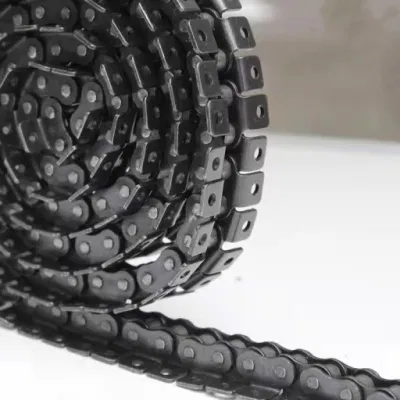
What are the common industries that utilize cast chains?
Cast chains find widespread use in various industries due to their strength, durability, and ability to handle heavy loads. Some of the common industries that utilize cast chains include:
- 1. Mining: Cast chains are commonly used in mining equipment and machinery to transport and convey materials in harsh and demanding environments.
- 2. Construction: The construction industry employs cast chains in applications such as cranes, excavators, and other heavy machinery for lifting and moving heavy materials.
- 3. Steel Manufacturing: Cast chains play a crucial role in steel manufacturing processes, including handling hot materials in high-temperature environments.
- 4. Cement and Concrete: In the cement and concrete industry, cast chains are used in cement kilns and other equipment that requires robust and reliable material handling.
- 5. Automotive: Some automotive manufacturing processes involve the use of cast chains for material handling and assembly line operations.
- 6. Pulp and Paper: Cast chains are utilized in pulp and paper mills for tasks like moving and processing wood chips and pulp.
- 7. Agriculture: Agricultural equipment, such as combine harvesters and grain elevators, use cast chains to handle heavy loads and rough conditions.
- 8. Power Generation: Cast chains are found in power plants for handling coal and biomass in fuel feed systems.
These industries and many others rely on the robust performance of cast chains to ensure efficient and reliable material handling and processing operations. The versatility of cast chains makes them suitable for a wide range of heavy-duty applications in industrial settings.

What are the advantages of using a cast chain in heavy-duty applications?
Cast chains offer several distinct advantages that make them well-suited for heavy-duty applications in various industries:
- Exceptional Strength: Cast chains are known for their high tensile strength and load-carrying capacity. The casting process allows for a uniform distribution of material, resulting in a chain that can handle heavy loads without deformation or failure.
- Durability: The robust construction and high-quality materials used in cast chains contribute to their exceptional durability. They can withstand harsh operating conditions, abrasive materials, and extreme temperatures, making them ideal for heavy-duty and demanding environments.
- Resistance to Wear and Corrosion: Cast chains are designed to resist wear caused by friction and abrasion during operation. Additionally, they can withstand corrosion from exposure to chemicals or moisture, making them suitable for use in corrosive environments.
- Customization: Cast chains can be tailored to meet specific application requirements. Manufacturers can create custom designs, such as apron chains, drag chains, or bucket elevator chains, with attachments and features optimized for the intended use.
- Reliability: Due to their strong and durable construction, cast chains offer high reliability and reduced downtime in heavy-duty applications. This is crucial for industries where interruptions in operation can result in significant financial losses.
- Long Service Life: When properly maintained, cast chains can have a long service life, reducing the frequency of replacements and overall operating costs.
- Compatibility with Harsh Environments: Cast chains excel in industries such as mining, construction, steel, cement, and lumber, where the equipment operates in challenging environments involving dust, dirt, high temperatures, and heavy loads.
In summary, the advantages of using cast chains in heavy-duty applications include their exceptional strength, durability, wear resistance, customization options, and reliability. These features make cast chains a preferred choice for industries that require robust and dependable power transmission solutions.


editor by CX 2023-10-27