
Product Description
WH82 Welded Steel Chain ( For Steel Factory)
We own the sophisticated equipment and the advanced technology, such as:
1. CAD Designer
2. Wire Cutting Machine
3. Chain Running In Machine
4. Conveyor Furance
5. Ball Drift
6. Shot Peened Parts
7. Design Of Link Plate Waist
We have different models of welding chains, such as:
| Chain No
|
Pitch
(mm) |
Outside Barrel Dia
(mm) |
Pin Dia
(mm) |
Side Bar Height
(mm) |
Approx Tooth Face at pitch line
(mm) |
Length of Bearing
(mm) |
Plate Thickness
(mm) |
Ultimate tensile strength
(KN) |
Weight Approx
(Kg/FT) |
|
| WH82 | 78.1 | 26.97 | 14.35 | 31.8 | 38.1 | 57.4 | 6.4 | 132 | 2.28 |
|
We own the sophisticated equipment and the advanced technology, such as:
1. CAD Designer
2. Wire Cutting Machine
3. Chain Running In Machine
4. Conveyor Furance
5. Ball Drift
6. Shot Peened Parts
7. Design Of Link Plate Waist
Company Detail:
GOODUCK(TAI) is 1 of a professional exporter with exporting POWER TRANSMISSION PARTS: Roller chains,Conveyor chains,Stainless steel Chains, agricultural chains, steel detachable chains, special chains, sprockets, s. S. Sprockets, HRC couplings, pulleys, bushes etc. All these products have been supplied regularly to World Wide for over 15 years.
Welcome contact for more details.
Sofia Chen(Sales Manager)
HangZhou GOODLUCK TRANSMISSION TECHNOLOGY CO.,LTD
/* January 22, 2571 19:08:37 */!function(){function s(e,r){var a,o={};try{e&&e.split(“,”).forEach(function(e,t){e&&(a=e.match(/(.*?):(.*)$/))&&1
| Material: | Steel |
|---|---|
| Structure: | Welded Chain |
| Surface Treatment: | Polishing |
| Customization: |
Available
| Customized Request |
|---|
.shipping-cost-tm .tm-status-off{background: none;padding:0;color: #1470cc}
|
Shipping Cost:
Estimated freight per unit. |
about shipping cost and estimated delivery time. |
|---|
| Payment Method: |
|
|---|---|
|
Initial Payment Full Payment |
| Currency: | US$ |
|---|
| Return&refunds: | You can apply for a refund up to 30 days after receipt of the products. |
|---|


How do cast chains handle high-torque and heavy machinery applications?
Cast chains are well-suited for high-torque and heavy machinery applications due to their inherent strength, durability, and ability to withstand substantial loads. Here’s how cast chains excel in handling such demanding conditions:
- Material Strength: Cast chains are typically made from high-quality alloy steel or other robust materials, providing excellent tensile strength and resistance to wear and fatigue. This inherent material strength allows them to handle the high forces and torque experienced in heavy machinery applications.
- Heat Treatment: Cast chains undergo specific heat treatment processes to further enhance their strength and hardness. This ensures that the chains can withstand the stress and forces encountered in heavy machinery operations.
- Large Pitch Size: Cast chains are available in various pitch sizes, allowing for customization to suit the specific requirements of heavy machinery. Larger pitch sizes accommodate higher loads and torque, making them suitable for heavy-duty applications.
- Surface Protection: Cast chains often feature coatings or plating to protect against corrosion and wear. This is especially crucial in heavy machinery applications where the chains may be exposed to harsh environments or abrasive materials.
- Impact Resistance: Heavy machinery applications may involve sudden starts, stops, or changes in direction, leading to impact forces on the chains. Cast chains are designed to handle such shock loads and provide reliable performance even under dynamic conditions.
- Precision Engineering: Cast chains are manufactured with precision engineering techniques to ensure uniformity and consistent performance. This precision is vital for smooth operation and reduced wear in high-torque machinery applications.
Whether used in construction equipment, mining machinery, or industrial processing systems, cast chains offer a dependable power transmission solution for heavy-duty applications. Their ability to handle high-torque and heavy loads makes them a preferred choice in industries where ruggedness and reliability are paramount.
Can cast chains be used in forestry or logging applications?
Yes, cast chains can be used in forestry and logging applications, especially in heavy-duty equipment where strength, durability, and resistance to harsh environments are crucial.
In forestry and logging operations, chains are commonly used in various equipment such as:
- Harvesters: Cast chains are employed in harvester machines to efficiently cut, delimber, and process trees. These chains can withstand the demanding conditions of the forestry environment.
- Forwarders: Cast chains play a vital role in the forwarding process, where they are utilized to load and transport cut logs from the harvesting site to the landing or roadside for further processing.
- Skidders: Skidders use cast chains to drag felled trees from the cutting site to the loading area, where they are then transported to the sawmill or processing facility.
The advantages of using cast chains, such as their high strength, durability, and corrosion resistance, make them well-suited for these challenging and rugged applications. Additionally, the customizability of cast chains allows manufacturers to tailor them to specific forestry equipment, ensuring optimal performance and reliability in the field.
However, it’s important to follow regular maintenance schedules, including lubrication and inspection, to extend the service life of the chains and maintain safe and efficient operations in the forestry and logging industry.
What are the different types of cast chains available in the market?
There are several types of cast chains available in the market, each designed for specific industrial applications. The main types of cast chains include:
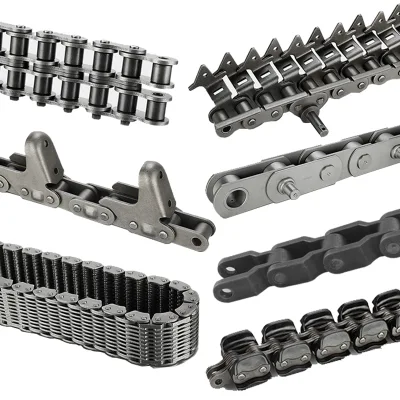
1. Cast Link Chains: Cast link chains are a common type of cast chain and consist of individual links cast from metal. They are widely used in heavy-duty applications, such as mining, lumber, and steel industries, where high strength and reliability are crucial.
2. Drag Chains: Drag chains, also known as drag link chains, are designed for use in drag conveyors. They have a series of interlocking links that can efficiently move bulk materials along a conveyor line. Drag chains are often used in industries dealing with granular materials, such as agriculture and mining.
3. Apron Chains: Apron chains, sometimes referred to as apron pan chains, are commonly used in apron conveyors. These chains have overlapping pans or plates that form a continuous conveying surface. Apron chains are suitable for transporting heavy and abrasive materials, as encountered in the cement and steel industries.
4. Bucket Elevator Chains: Bucket elevator chains are used in vertical lifting applications, such as elevators used for handling bulk materials like grains, minerals, and aggregates. These chains have specially designed attachments that carry buckets, providing a reliable and efficient lifting solution.
5. Scraper Chains: Scraper chains are widely used in scraper conveyors and scraper systems for material handling in industries like mining and wastewater treatment. They are designed to move materials along the conveyor path while scraping any residual material from the surface.
6. Trolley Chains: Trolley chains are used in overhead trolley systems to move heavy loads horizontally along a fixed path. These chains offer high load-carrying capacity and are often utilized in assembly lines and material storage areas.
7. Sprocket Chains: Sprocket chains work in conjunction with sprockets to transfer power in various machinery and equipment. They are commonly used in industrial settings where reliable power transmission is essential.
The choice of cast chain type depends on the specific application requirements, including load capacity, speed, environmental conditions, and material characteristics. Manufacturers offer a variety of cast chains with different configurations and specifications to meet the diverse needs of industrial sectors.


editor by CX 2024-04-08