
Product Description
Drag Slat Chains
Chains produce numerous types of conveyor and elevator chain for construction equipment and Asphalt plant manufacturers. This has become a specialist market where various types of Drag slat, Conveyor and Elevator chains can be produced to customers specific requirements.
The principal applications include hot stone elevating with chain and buckets from the dryer, drag slat for asphalt transport often to heated bins, inclined pan systems typically seen in batch plants and various drag bar chains used in pavers.
Drag Slat Chains
Chains produce numerous types of conveyor and elevator chain for construction equipment and Asphalt plant manufacturers. This has become a specialist market where various types of Drag slat, Conveyor and Elevator chains can be produced to customers specific requirements.
Detailed parameters of the chain
JKR2870/MIX3
Chains produce numerous types of conveyor and elevator chain for construction equipment and Asphalt plant manufacturers.
drag slat conveyors are manufactured from 2 cold-cambered bridge Ibeams making them the strongest conveyors in the world.
JKR2868/K2X3/CR
The use of conveyor chains is synonymous with Asphalt production where hot handling and abrasion make chains a pre-requisite.
The principal applications include hot stone elevating with chain and buckets from the dryer, drag slat for asphalt transport often to heated bins, inclined pan systems typically seen in batch plants and various drag bar chains used in pavers.
In addition to existing chain series, equipment manufacturers have over the years introduced their own standards within their equipment which has seen the development of a wide range of styles and types.
All chains are similar in application , but vary in terms of dimensions and materials employed.
| Drag Slat Chains
|
JKR2870/MIX3 |
|
Drag Slat Chains |
JKR2868/K2X3/CR |
The needs of users, is our pursuit, to provide users with the most suitable products, to provide practical service, is our firm belief, also is our “humanist, the good faith management” principle.
Besides, our after service will solve any problems when you meet them in time.
The welcome new old customer comes the electricity consultation discussion to purchase wholeheartedly.
|
Shipping Cost:
Estimated freight per unit. |
To be negotiated |
|---|
| Standard or Nonstandard: | Standard |
|---|---|
| Application: | Conveyer Equipment |
| Surface Treatment: | Baking Paint |
| Samples: |
US$ 36/Meter
1 Meter(Min.Order) | Order Sample |
|---|
| Customization: |
Available
| Customized Request |
|---|
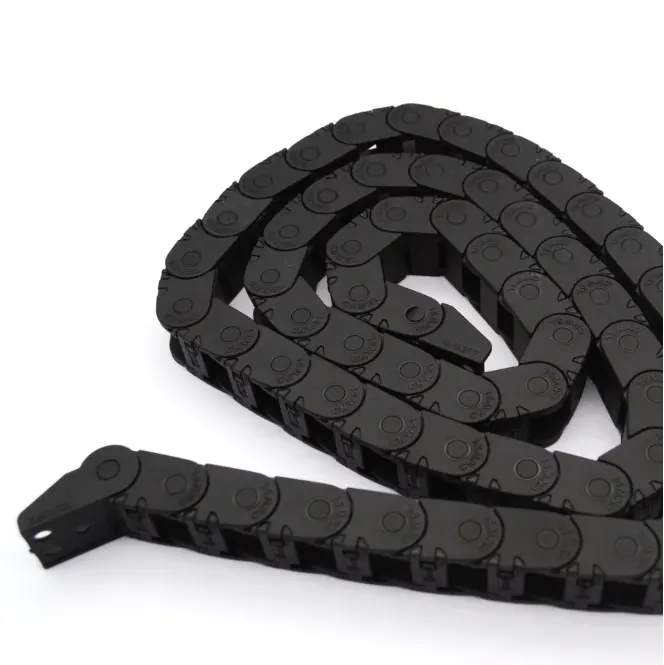
How do drag chains perform in high-precision and automated processes?
Drag chains excel in high-precision and automated processes, providing several key benefits that make them well-suited for these applications:
- Protecting Cables and Hoses: In high-precision environments, delicate cables and hoses must be protected from damage or tangling. Drag chains offer a secure housing that keeps cables organized and prevents them from being exposed to potential hazards.
- Smooth Cable Movement: Automated processes require precise and reliable cable movement. Drag chains ensure that cables and hoses move smoothly and without obstruction, reducing the risk of downtime and maintaining consistent performance.
- Reducing Friction and Wear: High-precision equipment often operates at faster speeds and with more frequent movements. Drag chains are designed to minimize friction and wear, extending the service life of cables and minimizing the need for frequent replacements.
- Flexible Cable Routing: Automated processes often involve complex cable routing requirements. Drag chains offer flexibility in cable management, allowing for custom configurations and ensuring that cables follow the precise path required by the automated machinery.
- Resistance to Contaminants: Automated processes may encounter various contaminants, such as dust, debris, or chemicals. Drag chains can be made from materials that resist these elements, protecting the cables and ensuring the machinery operates smoothly.
- Highly Durable: Drag chains are built to withstand constant use in automated processes. They are engineered to endure the demands of repetitive motion and high-precision operations without compromising performance.
- Improving Safety: By keeping cables and hoses securely contained within the drag chain, the risk of accidents or damage caused by loose cables is minimized, enhancing overall safety in the workplace.
- Customizable Designs: Drag chains can be tailored to fit specific automation setups, with options for size, length, and mounting configurations, ensuring they integrate seamlessly with the automated machinery.
With their ability to protect and manage cables, maintain smooth and reliable movement, and withstand the demands of high-precision and automated processes, drag chains play a critical role in optimizing efficiency, precision, and safety in a wide range of automated industrial applications.
What are the limitations of using drag chains in certain applications?
While drag chains offer numerous advantages in cable management and protection, they also have certain limitations that need to be considered when selecting and using them in specific applications. Here are some limitations:
1. Limited Flexibility:
Drag chains are designed to move in a linear or slightly curved path. They may not be suitable for applications that require high flexibility or intricate routing of cables in multiple directions.
2. Size and Space Constraints:
For applications with limited space, finding the right-sized drag chain that can accommodate all the necessary cables and hoses without causing overcrowding can be a challenge.
3. Weight Restrictions:
Heavy-duty drag chains can handle significant loads, but there are weight limits for each type and size of chain. Exceeding these limits can lead to premature wear and reduced performance.
4. Noise and Vibration:
In high-speed or dynamic applications, the movement of drag chains can generate noise and vibration, which might affect the overall system performance or require additional noise-damping measures.
5. Maintenance:
While drag chains reduce cable wear and maintenance needs, they still require regular inspection and maintenance to ensure they function optimally. Neglecting maintenance can lead to unexpected failures.
6. Temperature Limits:
Some drag chains have temperature limitations. High-temperature environments can cause drag chains to degrade or lose their structural integrity, impacting their performance and lifespan.
7. Chemical Resistance:
Exposure to certain chemicals can deteriorate the material of the drag chain. Selecting the appropriate material with chemical resistance is crucial in chemical or corrosive environments.
8. Environmental Exposure:
In outdoor applications, drag chains are exposed to weather conditions such as rain, snow, and UV radiation, which can affect their durability over time.
9. Cost:
Drag chains can be more expensive compared to other cable management solutions. The initial investment should be weighed against the benefits they provide.
10. Compatibility:
Ensuring compatibility between the drag chain, cables, and hoses is essential to prevent friction, abrasion, or damage to the cables.
Despite these limitations, drag chains remain highly versatile and widely used in various industrial applications for cable management and protection.
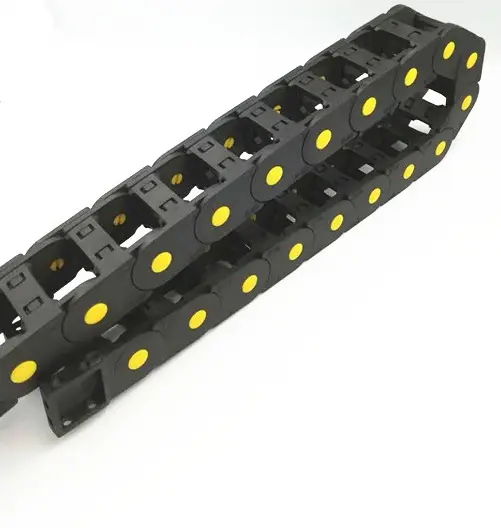
Can drag chains be used for both power and signal transmission in industrial equipment?
Yes, drag chains can be used for both power and signal transmission in industrial equipment. They are versatile cable management systems designed to protect and guide cables, hoses, and other lines while allowing them to move freely during machine operation.
Power Transmission:
Drag chains are commonly used to carry power cables that supply electrical energy to various moving parts of industrial machinery. These power cables can be used to drive motors, actuators, sensors, and other components that require electricity to function. The drag chain’s design allows the power cables to move back and forth while maintaining a safe and organized routing, ensuring uninterrupted power supply during machine operation.
Signal Transmission:
In addition to power cables, drag chains can also accommodate signal cables used for data transmission and communication. These signal cables may carry control signals, feedback signals, or other important data between different parts of the machine or between the machine and its control system. By using drag chains for signal transmission, the cables are protected from damage and wear due to continuous motion, which helps maintain the integrity of the transmitted signals.
Combined Power and Signal Transmission:
In many industrial applications, both power and signal cables are needed to ensure the proper functioning of the equipment. Drag chains are ideal for combining power and signal transmission in one system, providing a neat and organized solution that prevents tangling and interference between different cables.
Overall, drag chains offer a reliable and efficient method for managing both power and signal transmission in industrial equipment. Their ability to handle dynamic motion, protect cables from external hazards, and provide a flexible and organized cable routing makes them a valuable component in various industries, including manufacturing, automation, robotics, and more.


editor by CX 2023-08-16