
Product Description
HangZhou Terry Machinery Co.,Ltd specialized in one-stop solution of automatic machine.
and CNC parts.We are a TUV certified reliable supplier.Main products is linear guide,
ball screw,motor,chainsaw,pulley and all kinds bearing(ball bearing,needle bearing,roller
bearing,unit joint,cross bearing,spericial bearing and so on),Now we are exporting to 58
countries.including USA,GBR,Germany,Spain,Poland,Turkey ect.
Our major products& supplied: Meet all the international standards and ISO 9001-TS16949
Quality Certificate.
Our technicians and engineers Experience in the Industry area exceeds 23 years,sales
persons are well trained to accommodate your requests and speak english for your
conveniences.
The Goal of Terry Machinery to provide out customers with widest range of products at
competitive prices,backed with the best service 24 hours online.
Product Description
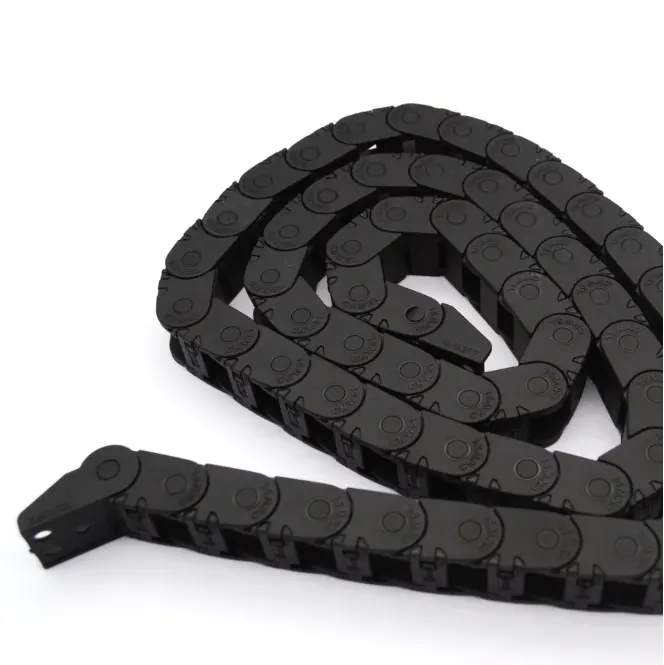
High Quality Transmission Chain Nylon Plastic H55x60 1000mm Bridge Cable Drag Chain for 3D Printer
drag chain is made of high quality nylon material. It has high pressure and tensile load, good toughness, high elasticity and wear resistance, flame retardancy, stable performance at high and low temperatures, and can be used outdoors. Resistance: oil resistance, salt resistance, and certain acid and alkali resistance. Operating speed and acceleration (specific speed and acceleration depend on operating conditions). Long service life
| H35 | Inner height × inner width | Outer height × outer width |
| 35*38 | 55*63 | |
| 35*50 | 55*75 | |
| 35*60 | 55*85 | |
| 35*75 | 55*100 | |
| 35*100 | 55*125 | |
| 35*125 | 55*150 | |
| 35*130 | 55*155 | |
| 35*150 | 55*175 | |
| 35*175 | 55*200 | |
| 35*200 | 55*225 | |
| 35*250 | 55*275 | |
| 35*300 | 55*325 |
Packing:
Detailed Photos
Company Profile
Certifications
Packaging & Shipping
Feedback
FAQ
| Usage: | Transmission Chain |
|---|---|
| Material: | Plastic |
| Surface Treatment: | Polishing |
| Feature: | Heat Resistant |
| Chain Size: | 1/2"*3/32" |
| Structure: | Chain Wheel |
| Samples: |
US$ 10/Piece
1 Piece(Min.Order) | |
|---|

Can drag chains be used in the electronics and semiconductor industries?
Yes, drag chains can be used in the electronics and semiconductor industries for cable management and protection. These industries often have complex machinery and equipment that require the precise and reliable routing of cables, wires, and hoses to ensure the smooth operation of manufacturing processes. Drag chains offer several advantages in these environments:
- Cable Protection: Drag chains enclose and protect cables, wires, and hoses from exposure to potential hazards like sharp edges, moving machine parts, or chemicals. This helps prevent damage to the cables and ensures a longer lifespan for sensitive electronic components.
- Cable Organization: Drag chains keep cables neatly organized and prevent tangling, reducing the risk of interference or malfunctions in the equipment.
- Space Optimization: In electronics and semiconductor manufacturing, space is often limited, and the layout of cables and hoses needs to be efficient. Drag chains help optimize the use of available space and maintain a tidy and clutter-free environment.
- Continuous Flexibility: Many electronics and semiconductor machines require continuous movement and flexibility in cable management. Drag chains are designed to withstand frequent bending, twisting, and repetitive motion without compromising the integrity of the cables.
- Cleanroom Compatibility: In cleanroom environments where dust and debris must be kept to a minimum, drag chains with sealed designs can prevent the ingress of contaminants and maintain the cleanliness of the area.
When using drag chains in the electronics and semiconductor industries, it’s essential to select the appropriate type of drag chain based on factors such as cable size, required movement range, and environmental conditions. Regular maintenance and inspection are also crucial to ensure the drag chains continue to function optimally and meet the strict demands of these precision-driven industries.

Can drag chains be used in material handling and conveyor systems?
Yes, drag chains are commonly used in material handling and conveyor systems across various industries. They play a critical role in efficiently managing and protecting cables, hoses, and other components that are essential for the operation of these systems. Here’s how drag chains are utilized in material handling and conveyor applications:
Cable Protection:
In material handling and conveyor systems, there are often multiple cables and hoses that need to be routed from one part of the system to another. Drag chains provide an enclosed and protected pathway for these cables, shielding them from potential damage due to movement, friction, or exposure to external elements.
Smooth Cable Movement:
Conveyor systems involve continuous movement, and the cables within them need to move smoothly without getting entangled or causing interference. Drag chains facilitate the smooth movement of cables, ensuring that they can extend and retract as needed without hindrance.
Preventing Downtime:
By protecting cables and hoses, drag chains minimize the risk of cable damage and subsequent downtime in material handling and conveyor systems. Damaged cables can lead to costly repairs and production delays, but with drag chains, the risk of such incidents is significantly reduced.
Adapting to Conveyor Movement:
Conveyor systems often involve varying movement patterns, such as inclines, declines, or curves. Drag chains are flexible and can adapt to these changes in conveyor direction, allowing the cables within to move freely and without strain.
Supporting Multiple Cables:
In material handling and conveyor systems, multiple cables and hoses are required to power and control various components. Drag chains can accommodate multiple cables in separate compartments, preventing them from becoming tangled and simplifying maintenance and troubleshooting.
Reducing Wear and Tear:
Continuous operation and repetitive motion in material handling and conveyor systems can cause wear and tear on cables. Drag chains protect the cables, extending their lifespan and reducing the need for frequent replacements.
Resistance to Harsh Environments:
Material handling and conveyor systems may operate in harsh environments with dust, dirt, moisture, and other contaminants. Drag chains are designed to withstand these conditions, ensuring the longevity and reliable performance of the cables within.
In summary, drag chains are indispensable components in material handling and conveyor systems, providing cable protection, ensuring smooth movement, and contributing to the overall efficiency and reliability of these systems in various industrial settings.
How do drag chains prevent cable wear and ensure smooth cable movement?
Drag chains, also known as cable carriers or cable chains, play a crucial role in protecting cables and hoses while ensuring their smooth movement in industrial applications. Here’s how they achieve this:
1. Enclosed Design:
Drag chains have an enclosed design with a series of interconnected links that form a protective channel for the cables and hoses inside. This design prevents external elements like dust, debris, and liquids from coming into direct contact with the cables, reducing the risk of abrasion and wear.
2. Cable Separation:
The individual links in the drag chain keep the cables and hoses separated from each other, preventing them from getting tangled or rubbing against each other. This separation minimizes friction and wear between the cables, ensuring their longevity.
3. Cable Support:
Drag chains provide excellent support for the cables and hoses they carry. The cables rest on the bottom of the chain’s channel, and the smooth movement of the chain prevents excessive bending or twisting, reducing the stress on the cables and prolonging their life.
4. Low Friction Materials:
High-quality drag chains are made from low-friction materials like nylon or plastic, reducing the friction between the cables and the chain itself. This feature ensures that the cables can move freely inside the chain without experiencing excessive wear.
5. Tension Adjustment:
Many drag chains allow for adjustable tension, which means that the user can adjust the tightness of the chain according to the number and size of the cables or hoses. Proper tension prevents slack and excessive movement, reducing the risk of wear due to movement-related stress.
6. Suitable Material Selection:
Choosing the right type of drag chain and material is essential to prevent cable wear. The chain’s material should be compatible with the cables it will carry and the environmental conditions in which it will operate. Stainless steel, plastic, and hybrid materials are commonly used for different applications.
7. Regular Inspection and Maintenance:
Regular inspection and maintenance of drag chains are vital to ensure their optimal performance. This includes cleaning the chain, checking for any signs of wear or damage, and making any necessary adjustments or replacements.
In conclusion, drag chains prevent cable wear and ensure smooth cable movement by providing an enclosed, separated, and well-supported channel for the cables and hoses. The right material selection, tension adjustment, and regular maintenance further contribute to the effective protection and longevity of the cables in industrial applications.


editor by CX 2023-10-23