
Product Description
Lifting and rigging chain has been 1 of the most popular rigging products on the market for many years, mainly due to its strength, durability, and ease of use. All our alloy steel rigging and lifting chain is heat treated to offer industry leading load capacity and durability. Some steel rigging chains are approved for overhead lifting, while others are not, so it is important to always know what type of lifting chain your specific rigging application requires
G80 alloy steel lifting chain
- Specifications sheet as belows:
| Size(mm) | Inside Width(mm) | Outside Width(mm) | Approx Weight KG/M | W.L.L. Ton | Test Load KN | B.L. KN |
| 6 x 18 | 7.5 | 21.0 | 0.79 | 1.1 | 27 | 45.2 |
| 7 x 21 | 9.0 | 24.5 | 1.07 | 1.5 | 37 | 61.6 |
| 8 x 24 | 10.0 | 28.0 | 1.38 | 2.0 | 48 | 80.4 |
| 10 x 30 | 12.5 | 35.0 | 2.20 | 3.2 | 76 | 125 |
| 12 x 36 | 15.0 | 42.0 | 3.10 | 4.6 | 109 | 181 |
| 13 x 39 | 16.3 | 46.0 | 3.80 | 5.0 | 128 | 214 |
| 16 x 48 | 20.0 | 56.0 | 5.63 | 8.0 | 192 | 320 |
| 16 x 49 | 24.5 | 59.5 | 5.71 | 8 | 192 | 320 |
How do we control quality:
a) Pay attention to adaptation for manufacture process
b) Approval report for shipment
c) Third party inspection is accepted
d) Keeping quality guarantee for a long period
e) Guaranteeing quality inspection of each product before assembly and packing.
f) Comply with ISO 9001
Any request or further qustions do not hesitate to let us know:
| Usage: | Lifting Chain |
|---|---|
| Material: | Alloy |
| Surface Treatment: | Electroplating |
| Feature: | Heat Resistant |
| Chain Size: | 1/2"*3/32" |
| Structure: | Welded Chain |
| Samples: |
US$ 3/Meter
1 Meter(Min.Order) | |
|---|
| Customization: |
Available
| Customized Request |
|---|
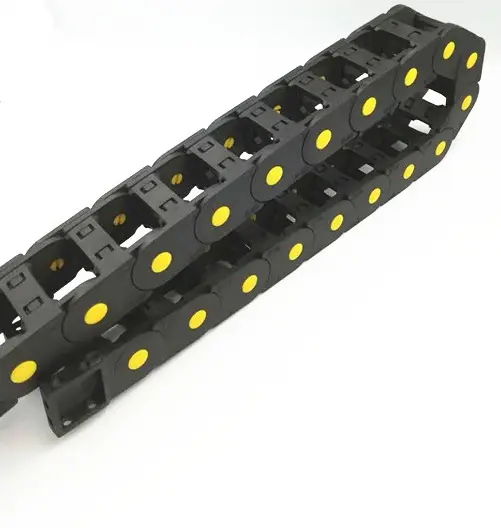
Can drag chains be used in the pharmaceutical and medical device manufacturing industry?
Yes, drag chains can be used in the pharmaceutical and medical device manufacturing industry, and they offer several benefits in this specific application. Here’s why:
- Cable Protection: In pharmaceutical and medical device manufacturing, there are often numerous cables and hoses that need to be protected and organized. Drag chains provide a reliable and efficient way to route and protect these cables, preventing tangling and potential damage during the manufacturing process.
- Cleanliness and Hygiene: Drag chains made from materials like stainless steel or special plastics can meet the industry’s stringent cleanliness and hygiene requirements. They are easy to clean and can withstand regular washdowns, ensuring a contamination-free manufacturing environment.
- Smooth Movement: Drag chains ensure smooth and consistent movement of cables and hoses, which is crucial in delicate medical device manufacturing processes where precision and accuracy are essential.
- Reduced Downtime: By organizing and protecting cables, drag chains help reduce the risk of cable damage and downtime due to cable-related issues. This leads to increased productivity and cost savings in the long run.
- Compliance: Drag chains can be designed to meet specific industry standards and regulations, ensuring compliance with safety and quality requirements in pharmaceutical and medical device manufacturing.
- Space Efficiency: Drag chains help in neatly organizing cables and hoses in a compact manner, optimizing the use of space in manufacturing equipment and reducing clutter.
Overall, drag chains play a crucial role in maintaining the efficiency, cleanliness, and safety of cable management in pharmaceutical and medical device manufacturing, making them a valuable component in this industry.
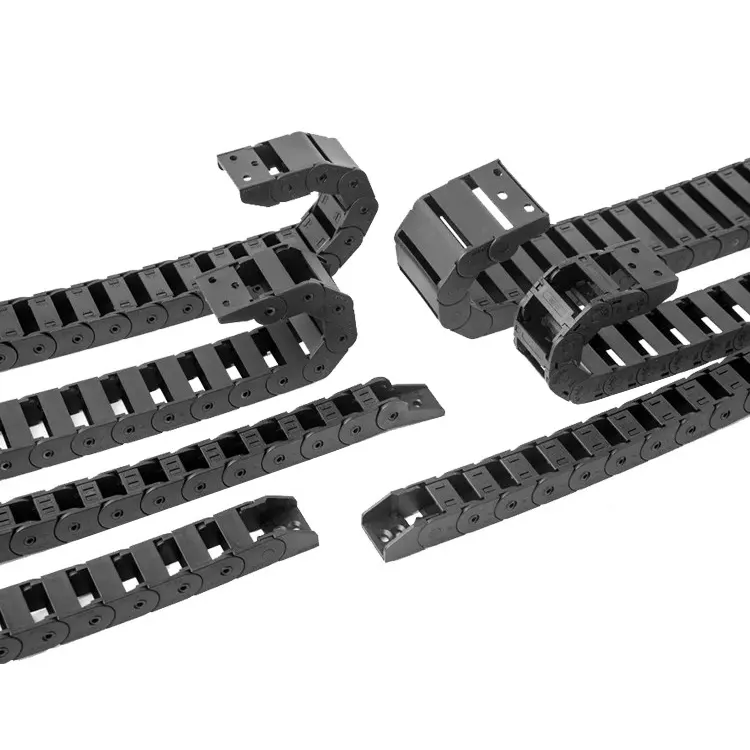
How do drag chains perform in dusty or dirty environments?
Drag chains are designed to perform exceptionally well in dusty or dirty environments, making them ideal for industrial applications where debris, dirt, and contaminants are common. Here’s how drag chains excel in such conditions:
- Protection: Drag chains enclose and protect cables and hoses, preventing dust, dirt, and debris from coming into direct contact with sensitive components. This protection minimizes the risk of cable damage or premature wear due to environmental factors.
- Sealed Design: Many drag chains have a sealed or semi-sealed design, further enhancing their ability to keep out dust and dirt. The sealed construction helps maintain the integrity of cables and hoses, ensuring reliable performance in challenging environments.
- Self-Cleaning: Drag chains are often designed with self-cleaning capabilities. As the chain moves, it sweeps away loose particles and debris, reducing the accumulation of dirt and ensuring smooth cable movement.
- Durable Materials: Drag chains are typically made from durable materials such as steel, stainless steel, or reinforced plastics. These materials are resistant to wear and can withstand exposure to harsh environmental conditions.
- Easy Maintenance: Despite operating in dusty or dirty environments, drag chains are designed for easy maintenance. They can be opened and cleaned when needed, allowing for quick removal of accumulated dirt or debris.
- Long Service Life: By providing effective cable protection and reducing exposure to contaminants, drag chains contribute to the longevity of cables and hoses, extending their service life in challenging industrial settings.
- Variety of Designs: Drag chains come in various designs and styles to suit specific applications. Whether the environment requires additional protection from dust, moisture, or chemicals, there are drag chain options available to meet those needs.
In summary, drag chains are highly effective in dusty or dirty environments due to their protective and self-cleaning features, durable materials, and ease of maintenance. They play a crucial role in ensuring the reliable and efficient performance of cable and hose management in challenging industrial conditions.
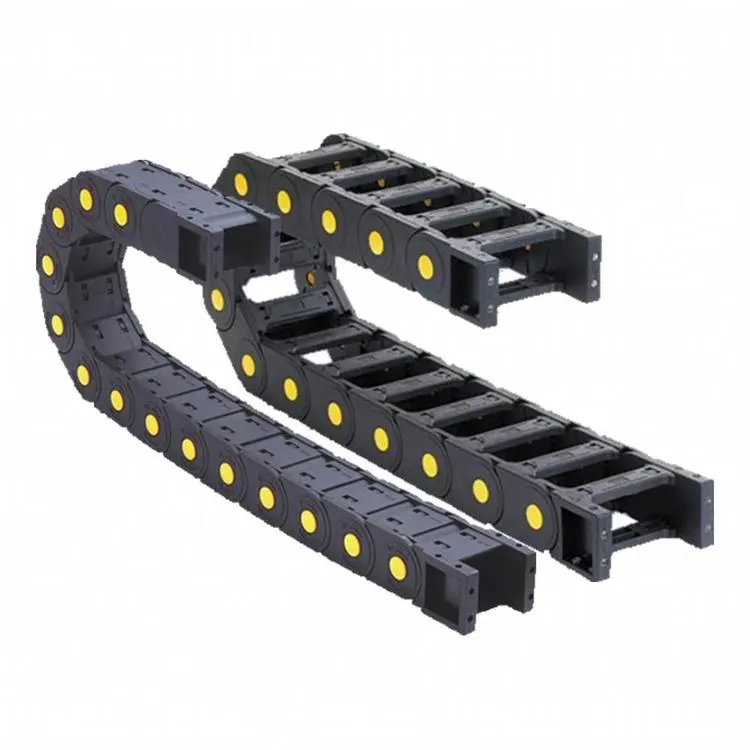
How do drag chains handle various cable sizes and types?
Drag chains are designed to accommodate various cable sizes and types, making them versatile and suitable for a wide range of industrial applications. Here’s how they handle different cable sizes and types:
Adjustable Design:
Most drag chains have an adjustable design, allowing users to customize the interior space according to the size and quantity of cables they need to house. The chain links or separators can be removed or repositioned to create the desired amount of space for the cables, ensuring a snug fit and minimizing any excess space that may cause cable movement or wear.
Wide Range of Sizes:
Drag chains are available in various sizes, ranging from small ones suitable for lightweight cables to large ones capable of holding numerous thick and heavy cables. Manufacturers provide size charts and specifications to help users select the right drag chain size based on their cable requirements and the dimensions of the equipment.
Cable Comb and Strain Relief:
Some drag chains come with built-in cable combs or strain relief features. The cable combs are designed to organize and separate individual cables within the chain, preventing them from tangling or interfering with each other. The strain relief elements ensure that cables are properly secured and protected from excessive tension or bending that could cause damage.
Various Mounting Options:
Drag chains can be mounted in various ways, such as on the floor, on the side of machinery, or overhead. The mounting method chosen can impact the available space for cables and the overall arrangement within the drag chain. Manufacturers offer different mounting brackets and accessories to accommodate diverse cable routing needs.
Cable Material and Flexibility:
Drag chains are designed to work with a wide range of cable materials, including PVC, rubber, TPU, and more. The flexibility of these materials allows them to move smoothly within the chain, even during dynamic operations. The drag chain’s design helps minimize cable wear by providing a smooth surface and eliminating sharp edges that could damage the cables.
Overall, drag chains provide an effective cable management solution that can handle various cable sizes and types. Their customizable and adaptable design, combined with the ability to protect and guide cables during motion, makes them an essential component for ensuring the reliability and longevity of cables in industrial machinery and automated systems.


editor by CX 2023-09-04