
Product Description
Product Description
Product Parameters
| Standard | GB, ISO, ANSI, DIN |
| Type | Standard A and standard B precision roller chain, conveyor chain; |
| special chain with accessories, welding chain, leaf chain and sprocket | |
| ANSI chain No. | 40,50,60,80,100,120,140,160,180,200,240; |
| C40,C50,C60,C80,C100,C120,C140,C160; | |
| DIN/ISO chain No. | 08A,10A,12A,16A,20A,24A,28A,32A,36A,40A,48A; |
| C08A,C10A,C12A,C16A,C20A,C24A,C28A,C32A; | |
| Application | Food processing, pharmaceutical and chemical industries, electronics, machinery; |
| household appliances, automotive manufacturing, metallurgy, sewage treatment | |
| Series | A series,B series |
More Products
Advantage
Certifications
DETAILS ABOUT CHINAMFG CHAIN
Exhibition
Workshop
Application
Packaging Details
Shipping
Contact Information
FAQ
1. Are you manufacturer or trade Company?
We are a factory founded in 1997 with trade team for international service.
2. What terms of payment you usually use?
T/T 30% deposit and 70% against document, Western Union, L/C at sight
3. What is your lead time for your goods?
Normally 35 days after confirmed order. 30 days could be available in low season for some items (during May to July), and 45 days during new year and hot season ( Jan to March).
4. Samples
For customers who need sample confirmation before ordering, please bear in mind that the following policy will be adopted:
1) All samples are free of charge with the maximum value not exceeding USD 100.
2) The courier cost for the first-time sample sending will be charged for by the consignee. We will send the samples with freight to be collected. So please inform your account with FedEx, UPS, DHL or TNT so that we can proceed promptly.
3) The first-time courier cost will be totally deducted from the contract value of the trial cooperation.
4) OEM/ODM are both available.
| Usage: | Transmission Chain, Drag Chain, Conveyor Chain, Dedicated Special Chain |
|---|---|
| Material: | Stainless steel |
| Surface Treatment: | Polishing |
| Feature: | Heat Resistant |
| Chain Size: | 1/2"*11/128" |
| Structure: | Roller Chain |
| Samples: |
US$ 1/Meter
1 Meter(Min.Order) | |
|---|
| Customization: |
Available
| Customized Request |
|---|


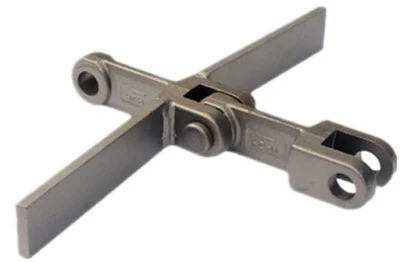
Can cast chains be used in power transmission for steel mills and metal processing?
Yes, cast chains can be used effectively in power transmission applications for steel mills and metal processing plants. Steel mills and metal processing facilities often have demanding operating conditions that require robust and reliable power transmission systems. Cast chains are well-suited for these environments due to their inherent strength, durability, and resistance to wear and abrasion.
In steel mills, cast chains are commonly used for conveying heavy loads of raw materials such as iron ore, coal, and scrap metal to different processing areas. They are also employed in the transportation of finished products such as steel bars, plates, and coils.
Some of the reasons why cast chains are preferred in steel mills and metal processing include:
- Strength and Load Capacity: Cast chains are designed to handle heavy loads and provide high tensile strength, making them suitable for moving heavy metal materials throughout the processing stages.
- Resistance to Abrasion: The materials used in cast chains, such as heat-treated alloy steel, provide excellent resistance to abrasive materials commonly found in metal processing environments.
- Durability: Cast chains have a longer service life compared to some other chain types, reducing the need for frequent replacements and maintenance.
- Reliability: In continuous production environments, reliable power transmission systems are crucial to avoid costly downtime. Cast chains offer dependable performance, ensuring smooth operations.
- Customization: Cast chains can be customized to fit specific applications and meet the requirements of different steel mill processes, such as conveying, cooling, and heat treatment.
When using cast chains in steel mills and metal processing, proper lubrication, regular maintenance, and adherence to safety guidelines are essential to ensure optimal performance and safety.
Can cast chains be used in power transmission systems for renewable energy?
Yes, cast chains can be used in power transmission systems for renewable energy applications. Power transmission systems in renewable energy often involve the transfer of mechanical power from one component to another, such as in wind turbines or solar tracking systems. Cast chains are suitable for these applications due to their robust construction, high strength, and resistance to fatigue and wear.
In wind turbines, cast chains can be used in pitch control systems, which adjust the angle of the turbine blades to optimize power generation. These chains must endure varying loads and harsh environmental conditions, making the durability of cast chains advantageous.
Similarly, in solar tracking systems, cast chains can be employed to control the orientation of solar panels to track the sun’s movement. The ability of cast chains to handle lateral forces and side loads makes them suitable for this task.
When selecting cast chains for renewable energy applications, factors like chain size, strength, and material must be considered to ensure they meet the specific requirements of the power transmission system. Regular maintenance and proper lubrication are also important to extend the lifespan and performance of the cast chains in renewable energy applications.

How do you select the right size and strength for a cast chain?
Selecting the right size and strength for a cast chain involves considering several factors to ensure optimal performance and safety in a specific application.
1. **Load Requirements:** Determine the maximum load the chain will be subjected to during operation. This includes both the static load and any dynamic or shock loads that may occur. The chain’s strength should exceed the maximum anticipated load to avoid premature wear or failure.
2. **Speed and RPM:** Consider the operating speed and the number of revolutions per minute (RPM) the chain will experience. Higher speeds and RPMs can lead to increased wear, so the chain must be capable of handling the demands of the application.
3. **Chain Pitch:** Select the appropriate chain pitch, which is the distance between the center of two consecutive pins. The pitch should match the sprocket’s pitch diameter to ensure smooth engagement and minimal wear.
4. **Environmental Factors:** Evaluate the operating environment, including temperature, humidity, and the presence of corrosive substances or contaminants. Choose a cast chain with the appropriate material and surface treatment to withstand the environmental conditions.
5. **Service Life Expectancy:** Consider the desired service life of the chain. A longer service life may require a higher-strength chain with superior wear resistance.
6. **Safety Factors:** Apply appropriate safety factors to account for uncertainties and variations in the operating conditions. This helps ensure the chain’s durability and reliability under unexpected or harsh conditions.
7. **Consult Manufacturer’s Guidelines:** Always refer to the manufacturer’s guidelines, catalogs, or technical specifications to select the right cast chain for a specific application. Manufacturers can provide valuable insights and recommendations based on their expertise and knowledge of the chain’s capabilities.
By carefully considering these factors and consulting with chain manufacturers or experts, you can select the right size and strength of a cast chain that will meet the requirements of your industrial application and provide long-lasting performance.


editor by CX 2023-10-26