
Product Description
Product Description
Product Parameters
| Standard | GB, ISO, ANSI, DIN |
| Type | Standard A and standard B precision roller chain, conveyor chain; |
| special chain with accessories, welding chain, leaf chain and sprocket | |
| ANSI chain No. | 40,50,60,80,100,120,140,160,180,200,240; |
| C40,C50,C60,C80,C100,C120,C140,C160; | |
| DIN/ISO chain No. | 08A,10A,12A,16A,20A,24A,28A,32A,36A,40A,48A; |
| C08A,C10A,C12A,C16A,C20A,C24A,C28A,C32A; | |
| Application | Food processing, pharmaceutical and chemical industries, electronics, machinery; |
| household appliances, automotive manufacturing, metallurgy, sewage treatment | |
| Series | A series,B series |
More Products
Advantage
Certifications
DETAILS ABOUT CHINAMFG CHAIN
Exhibition
Workshop
Application
Packaging Details
Shipping
Contact Information
FAQ
1. Are you manufacturer or trade Company?
We are a factory founded in 1997 with trade team for international service.
2. What terms of payment you usually use?
T/T 30% deposit and 70% against document, Western Union, L/C at sight
3. What is your lead time for your goods?
Normally 35 days after confirmed order. 30 days could be available in low season for some items (during May to July), and 45 days during new year and hot season ( Jan to March).
4. Samples
For customers who need sample confirmation before ordering, please bear in mind that the following policy will be adopted:
1) All samples are free of charge with the maximum value not exceeding USD 100.
2) The courier cost for the first-time sample sending will be charged for by the consignee. We will send the samples with freight to be collected. So please inform your account with FedEx, UPS, DHL or TNT so that we can proceed promptly.
3) The first-time courier cost will be totally deducted from the contract value of the trial cooperation.
4) OEM/ODM are both available.
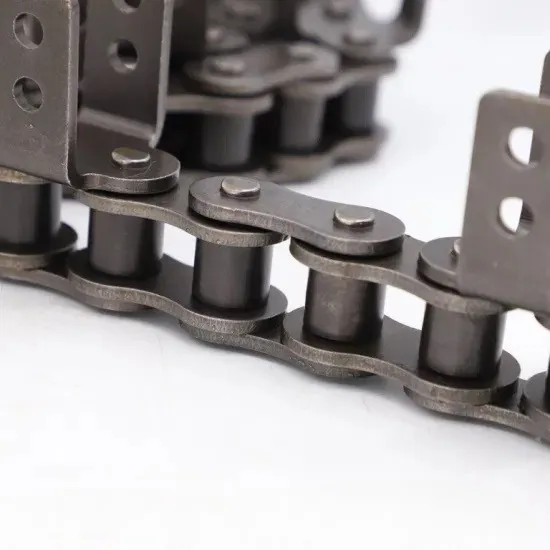
| Usage: | Transmission Chain, Drag Chain, Conveyor Chain, Dedicated Special Chain |
|---|---|
| Material: | Stainless steel |
| Surface Treatment: | Polishing |
| Feature: | Heat Resistant |
| Chain Size: | 1/2"*11/128" |
| Structure: | Roller Chain |
| Samples: |
US$ 1/Meter
1 Meter(Min.Order) | |
|---|
| Customization: |
Available
| Customized Request |
|---|

Can cast chains be used in oil and gas exploration and production equipment?
Yes, cast chains are commonly used in various oil and gas exploration and production equipment due to their ruggedness and ability to withstand harsh operating conditions. Some of the applications where cast chains are utilized include:
- Oil Rig Hoisting Systems: Cast chains play a vital role in the hoisting systems of oil rigs, used for lifting heavy drilling equipment and casings during drilling operations. The high strength and durability of cast chains make them suitable for handling substantial loads.
- Conveyors: In the oil and gas industry, conveyors are used to transport materials and products within production facilities. Cast chains are utilized in these conveyor systems due to their ability to handle heavy loads and withstand abrasive materials.
- Winches and Lifting Devices: Cast chains are used in winches and lifting devices that are employed in various oil and gas operations, including lifting and positioning equipment during drilling, well servicing, and construction activities.
- Anchor Handling: For offshore operations, such as anchor handling for floating rigs or vessels, cast chains are used to secure anchors and manage anchor lines during drilling and exploration tasks.
- Mud Pumps: Mud pumps are critical components in drilling rigs, and cast chains are utilized to drive the reciprocating motion of the pumps, ensuring a continuous supply of drilling mud to the wellbore.
Oil and gas exploration and production environments are often challenging, with exposure to corrosive substances, high pressures, and extreme temperatures. Cast chains, being made from robust materials, exhibit excellent corrosion resistance and can operate reliably under demanding conditions.
Overall, cast chains have proven to be a reliable and efficient choice for various oil and gas equipment, contributing to the smooth and safe operation of exploration and production activities in the industry.

Can cast chains be used in marine or underwater environments?
Yes, cast chains can be used in marine or underwater environments, but their suitability depends on the specific materials used in the chain construction. Cast chains made from materials with good corrosion resistance, such as stainless steel or other corrosion-resistant alloys, are better suited for these applications.
In marine environments, chains are exposed to various corrosive elements, including saltwater, which can lead to accelerated corrosion and rusting in standard chains. However, cast chains made from corrosion-resistant materials can withstand these harsh conditions and provide reliable performance over extended periods.
Applications in marine or underwater environments where cast chains are commonly used include shipboard machinery, offshore oil and gas equipment, underwater mining operations, and marine construction projects. These chains play a crucial role in power transmission, material handling, anchoring, and various marine applications where high strength and corrosion resistance are essential.
It’s essential to select the appropriate material and design for the cast chain based on the specific marine or underwater application’s requirements. Regular maintenance, including proper cleaning and lubrication, can further extend the chain’s service life and ensure optimal performance in these challenging environments.
What are the different types of cast chains available in the market?
There are several types of cast chains available in the market, each designed for specific industrial applications. The main types of cast chains include:
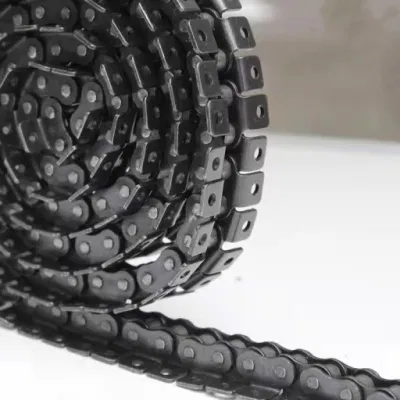
1. Cast Link Chains: Cast link chains are a common type of cast chain and consist of individual links cast from metal. They are widely used in heavy-duty applications, such as mining, lumber, and steel industries, where high strength and reliability are crucial.
2. Drag Chains: Drag chains, also known as drag link chains, are designed for use in drag conveyors. They have a series of interlocking links that can efficiently move bulk materials along a conveyor line. Drag chains are often used in industries dealing with granular materials, such as agriculture and mining.
3. Apron Chains: Apron chains, sometimes referred to as apron pan chains, are commonly used in apron conveyors. These chains have overlapping pans or plates that form a continuous conveying surface. Apron chains are suitable for transporting heavy and abrasive materials, as encountered in the cement and steel industries.
4. Bucket Elevator Chains: Bucket elevator chains are used in vertical lifting applications, such as elevators used for handling bulk materials like grains, minerals, and aggregates. These chains have specially designed attachments that carry buckets, providing a reliable and efficient lifting solution.
5. Scraper Chains: Scraper chains are widely used in scraper conveyors and scraper systems for material handling in industries like mining and wastewater treatment. They are designed to move materials along the conveyor path while scraping any residual material from the surface.
6. Trolley Chains: Trolley chains are used in overhead trolley systems to move heavy loads horizontally along a fixed path. These chains offer high load-carrying capacity and are often utilized in assembly lines and material storage areas.
7. Sprocket Chains: Sprocket chains work in conjunction with sprockets to transfer power in various machinery and equipment. They are commonly used in industrial settings where reliable power transmission is essential.
The choice of cast chain type depends on the specific application requirements, including load capacity, speed, environmental conditions, and material characteristics. Manufacturers offer a variety of cast chains with different configurations and specifications to meet the diverse needs of industrial sectors.


editor by CX 2023-11-08